
Squak Mountain Habitat Restoration
21500 Southeast May Valley Road, Issaquah, WA, 98027
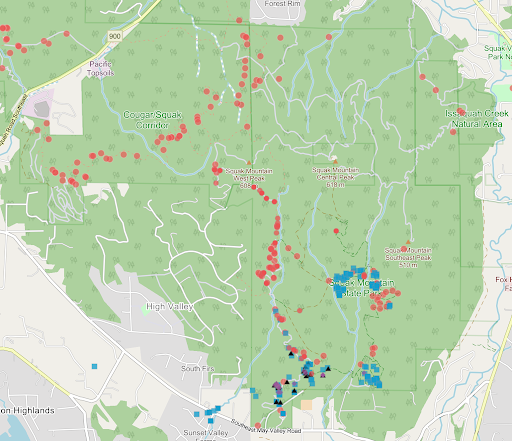
Map of Holly Removal Progress on Squak Mountain
Red dots mark holly sightings recorded by IATC and iNaturalist users. Blue squares indicate groves where removal work has been completed or undertaken. Purple diamonds mark treated groves where some regrowth was found during follow-up visits, while black triangles indicate groves confirmed dead. See the live map for additional details.
Map courtesy of Nicole Deflaux.
Restoring Native Forest Habitat
The Issaquah Alps Trails Club (IATC) and Washington State Parks are working together to restore native forest habitat on Squak Mountain by removing invasive English holly. Led by IATC Forest Stewards Anne Newcomb and Nicole Deflaux, alongside Washington State Parks Ranger Ellen Moline, this ongoing project brings volunteers together to protect the health and biodiversity of our local forests.

Our Restoration Work
Since March 2024, volunteers have contributed 660 hours to addressing 118 groves of holly on Squak Mountain.* Larger trees are treated with targeted herbicide injections, while smaller saplings and shoots are pulled by their roots. Volunteers also revisit treated areas to check for regrowth and remove plants that were missed. To date, the team has injected approximately 260 holly trees, removed 320 saplings with a weed wrench, and pulled 4,000 plants by hand. This ongoing work helps native vegetation recover and supports a healthier, more diverse forest.
*as of 10/01/2026
This project is supported in part by King County Parks, in partnership with the Issaquah Alps Trails Club and Washington State Parks.

Why Remove English Holly?
English holly (Ilex aquifolium) is a Class C noxious weed in Washington State. A former holly and Christmas tree farm along May Valley Road near SR-900 may have contributed to its spread on Squak Mountain. Birds eat the berries and disperse the seeds throughout the forest, allowing holly to spread beyond its original planting sites. Once established, holly can form dense thickets that shade out native understory plants. Its foliage is also highly flammable, potentially increasing wildfire risk. Because mature trees can resprout after cutting, controlling holly requires targeted treatment and continued monitoring.
Holly Removal in Action
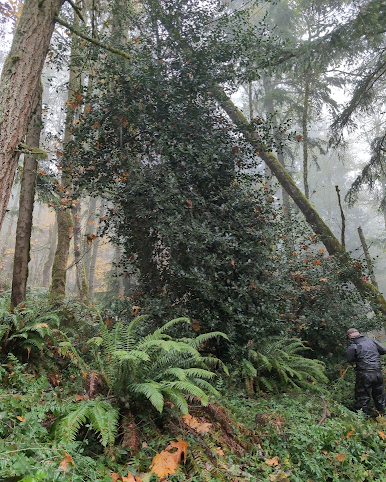
A. Untreated holly grove: Dense holly growth can be difficult to navigate and often hides smaller plants growing beneath the mature trees.
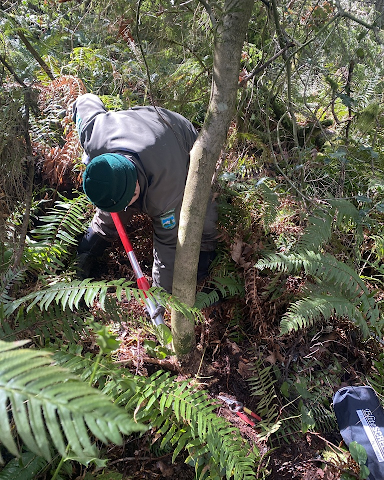
C. Treating mature trees: Washington State Parks Ranger Ellen Moline uses specialized equipment to inject herbicide into the root base of a mature holly tree.
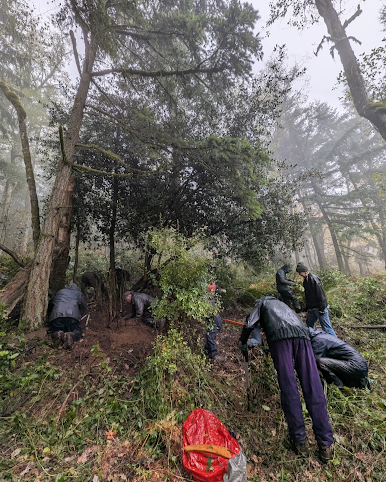
B. Clearing the base: Once the lower trunk is exposed, volunteers can identify and remove saplings and shoots growing around the base.
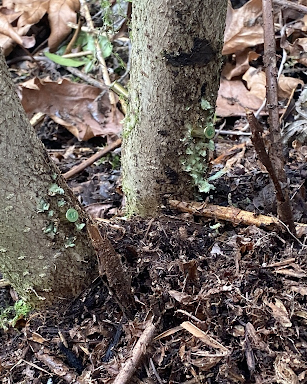
D. Checking treated trees: Treated trees are left standing so volunteers can locate the grove later and check for regrowth.
Get Involved
Help protect Squak Mountain’s native forest by joining an IATC and Washington State Parks restoration work party. Volunteers help remove invasive holly and support the long-term health of the forest. No special experience is needed. Check our upcoming events for work party dates and details on how to participate.

Latest News
10/31/2026: Restoring Squak Mountain, One Holly Grove at a Time
07/31/2025: Supporter Spotlight: Ellen Moline
10/31/2024: Supporter Spotlight: Anne Newcomb
03/24/2024: English Holly—A Friendly-looking Foe
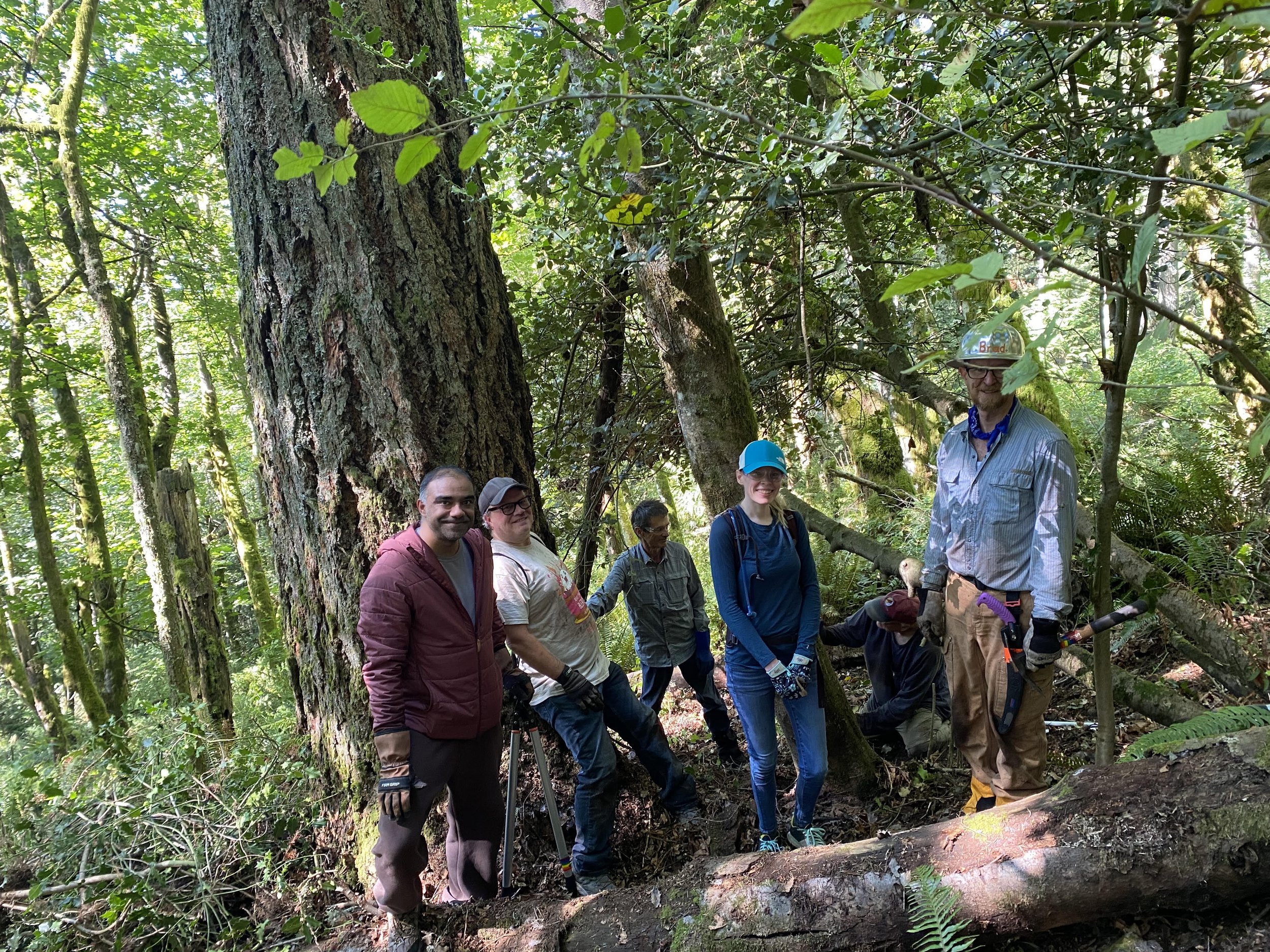
Volunteers gathering at our monthly work party, September 2026. Courtesy of Anne Newcomb.
Additional Learning Resources
Washington State Noxious Weed Control Board — Information about noxious weeds in Washington.
King County Noxious Weed Control Program — Invasive plant identification and control resources.
Washington State Parks — Information about park stewardship and natural resource conservation.
Explore Other Local Restoration Projects
Discover restoration efforts across the Issaquah Alps and surrounding communities:
Private Restoration Event Inquiry
Interested in organizing a group restoration event? Learn about the requirements and submit an inquiry to partner with IATC.

REI Team Restoration Event at Squak Mountain, July 2024. Photo courtesy of REI.
Join the Issaquah Alps Trails Club and Green Issaquah for an invasive species removal restoration project on Squak Mountain.