
Issaquah Miyawaki Forest
190 NW Dogwood Street, Issaquah, WA 98027
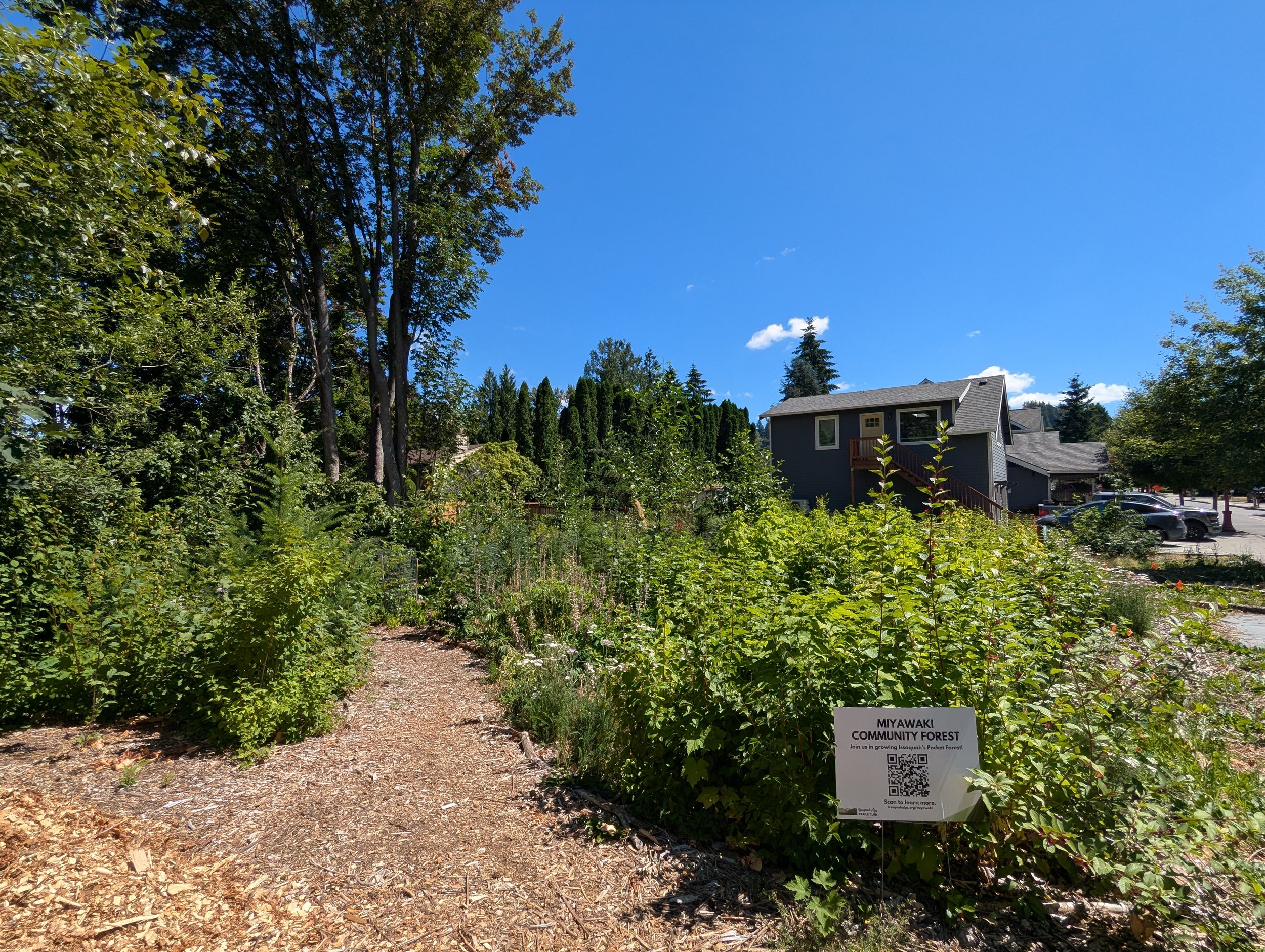
A Forest for the Community
The Issaquah Alps Trails Club and Green Issaquah have partnered to transform a small park with degraded soil that buffers Issaquah Creek into a community Miyawaki forest. This will be a space where people can contribute to planting and caring for the forest - as well as simply enjoying spending time there. The forest will include 34 plant species - all native!
Miyawaki forests are about growing local connection and hope—so community involvement is a big part of the process! Whether you participate in preparing the site or soil, planting native trees and understory, caring for the forest in the first two years or enjoy watching the plants grow up, we hope you find joy and satisfaction in the Issaquah Miyawaki Forest!!!
This project is made possible thanks to the generous support of the
Forterra Community Restoration Grant, the Foundation for Intelligent Life on Earth, and
Lake Washington/Cedar/Sammamish Watershed (WRIA 8).



Artist Statement: Carrie Larson
Threshold is intended to subtly demark the space between the Issaquah neighborhood and Miyawaki Forest. Its form alludes to a Japanese torii gate, honoring the origins of the planting method pioneered by Akira Miyawaki. He observed that the trees which traditionally grew around Shinto shrines (marked by torii gate entrances) were the true native flora—an observation that formed the foundation for his restorative, native planting approach.
Constructed of Western Red Cedar from trees downed in Issaquah city parks during the 2024 bomb cyclone event, Threshold offers a passageway into nature’s sacred space. Akin to a nurse log, new life springs up around it, while engravings on its interior panels, made with Japanese woodblock carving tools, quietly illustrate cedar’s companion plants—Salal, Evergreen Huckleberry, Western Sword Fern, Twinberry, and Red Elderberry, as well as the lovely Lupine.
The curving negative spaces between the panels suggest movement and give a nod to the nearby river, while the branch forms overhead, framing the sky like a forest canopy. The piece is left unfinished to weather naturally as a tangible symbol of natural cycles.

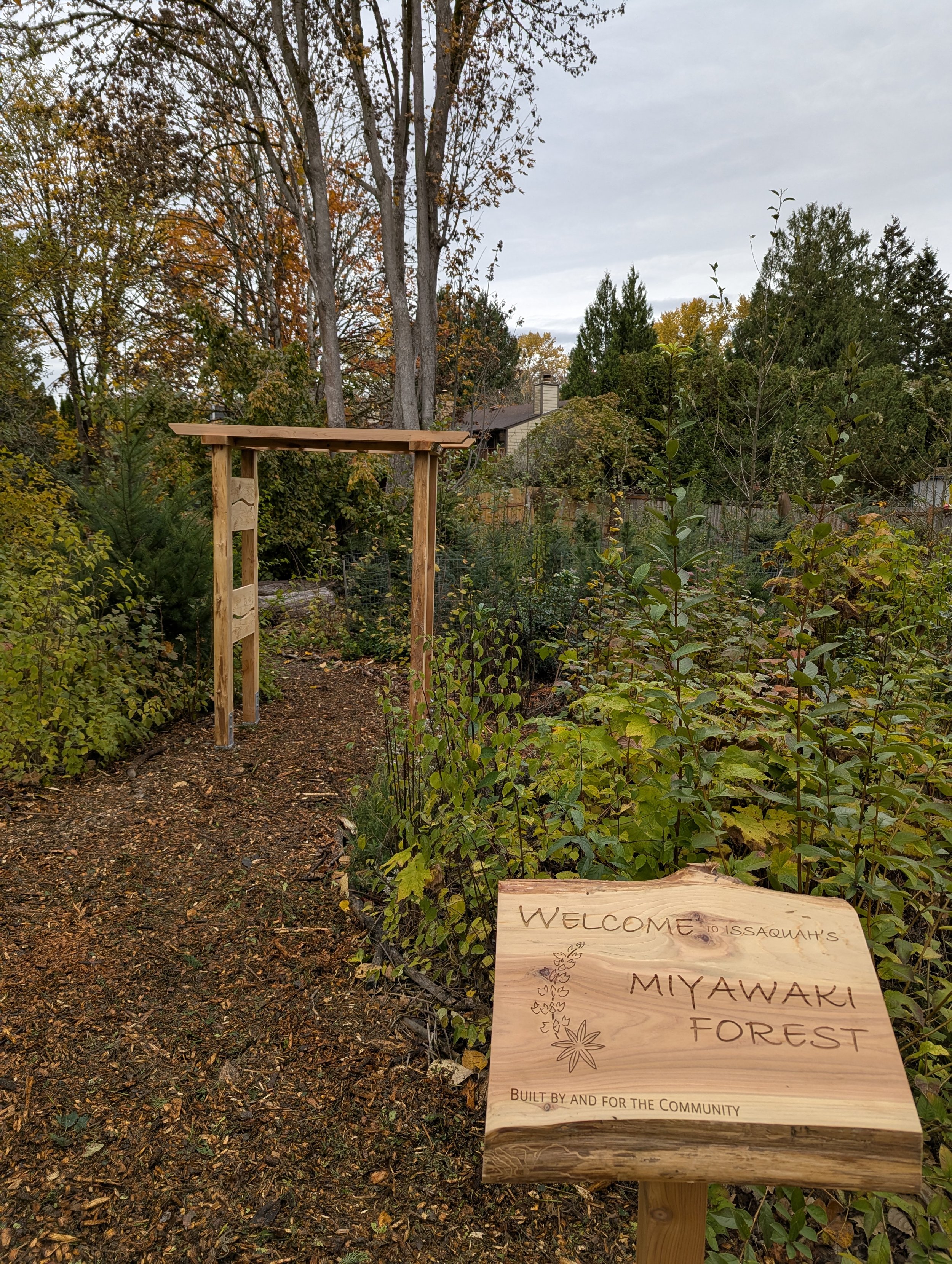
Issaquah Miyawaki Forest Threshold, November 2026
Latest News
Upcoming Volunteer Events
8/20/2026: A forest takes root in downtown Issaquah
3/1/2026: Miyawaki’s One-Year Anniversary
12/1/2025: The Miyawaki Forest: Growing Tomorrow’s Stewards
1/3/2025: Community Restoration Grant Award to IATC
3/6/2025: Miyawaki Method: Issaquah's first pocket forest about to take root
3/21/2025: Miyawaki Forest Method in Issaquah

March 2025: Kickoff Event

July 2025

March 2025: Kickoff Event

July 2025
Miyawaki Method
Japanese botanist and plant ecology expert Dr. Akira Miyawaki, planted his first forest in Japan and now Miyawaki Forest projects are popping up all around the world! The Miyawaki Method is one of the most effective ways to plant for creating forest cover quickly on degraded land - using only native species in order to mimic the natural process of forest re-wilding. Miyawaki forests grow 10 times faster, are 30 times denser, and contain 100 times more biodiversity than most planted forests - reaching maturity in 15-40 years, rather than 150-200 years. Miyawaki forests are viable solutions for cities looking to rapidly build climate resilience as they are quick to establish, maintenance-free after the first two or three years, and can be created on sites as small as 3 square meters.
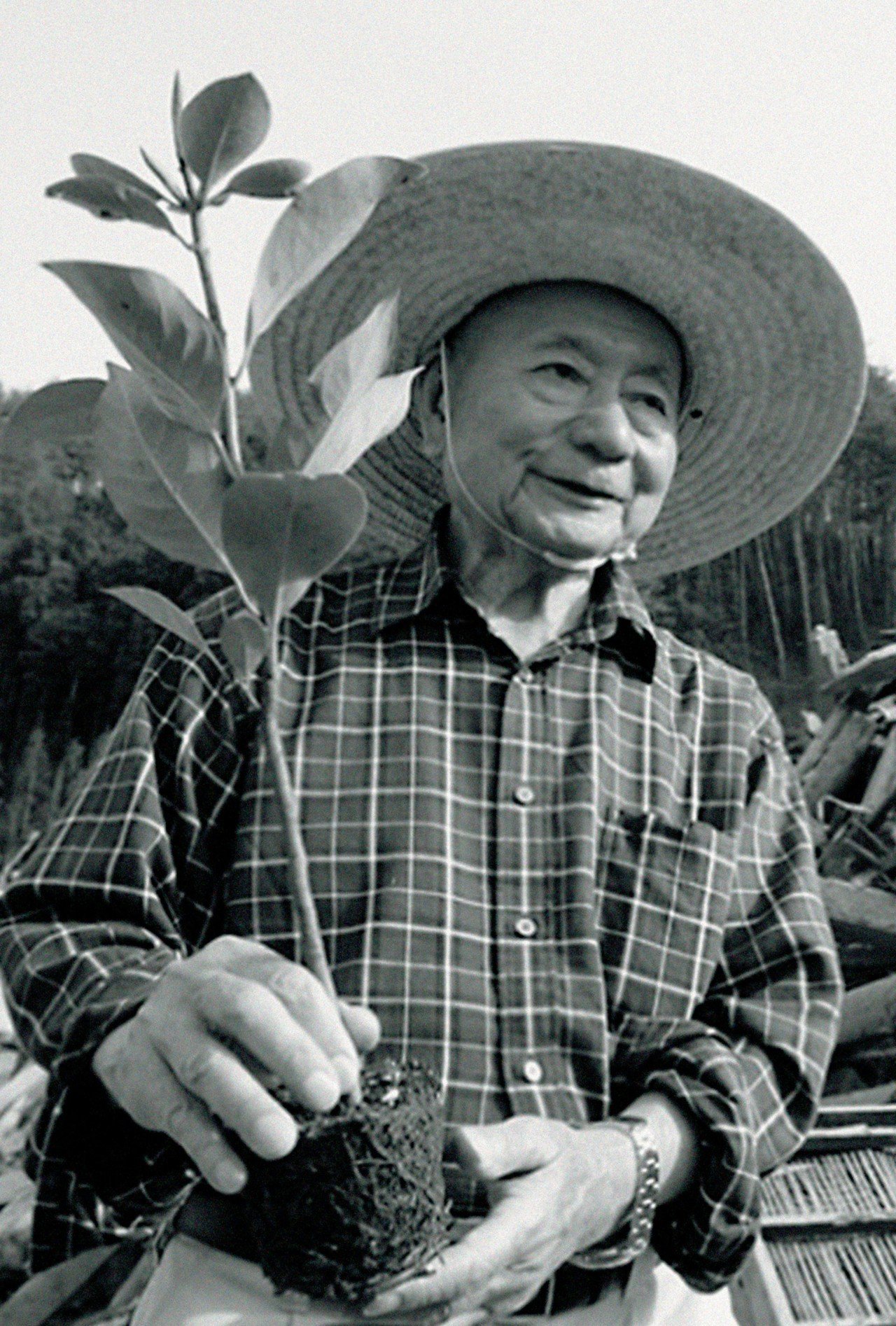
Washington Miyawaki Forests
The Issaquah Miyawaki Forest is part of a growing movement in Washington. Here are other forests throughout Washington you can learn more about and explore:
Explore Other Local Restoration Sites
Discover restoration efforts across the Issaquah Alps and surrounding communities:
Private Restoration Event Inquiry
Interested in organizing a group restoration event? Learn about the requirements and submit an inquiry to partner with IATC.
