
The Miyawaki Forest: Growing Tomorrow’s Stewards
By Tayler Nichols, Urban Forestry Volunteer Coordinator, City of Issaquah
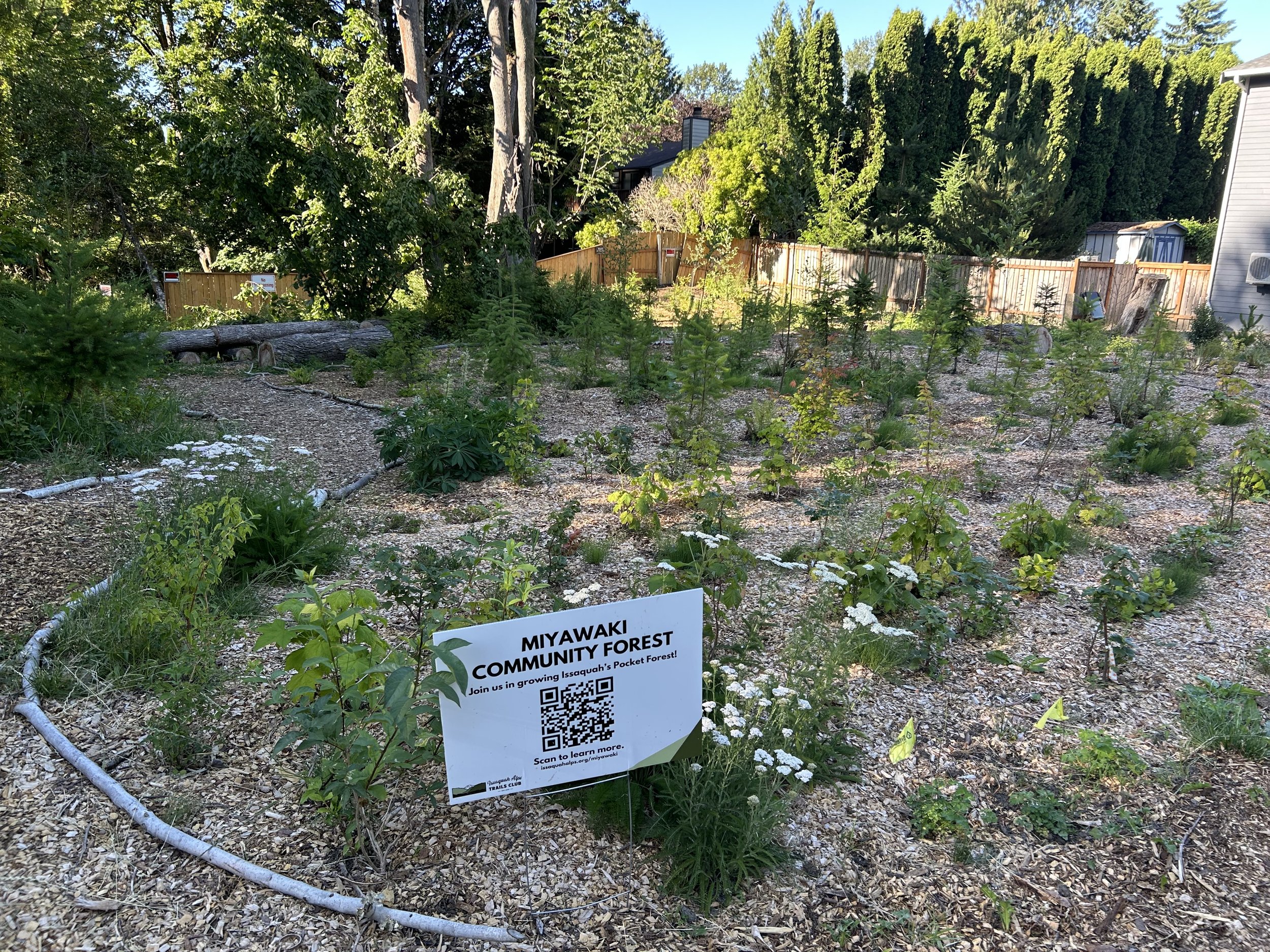
Funded by Forterra’s Community Restoration Grant and the Foundation for Intelligent Life on Earth, Issaquah’s first Miyawaki Forest broke ground in March 2025. In collaboration with the Issaquah Alps Trails Club, the City of Issaquah, and over 100 volunteers, a former grassy lot along Issaquah Creek turned into a biodiverse community pocket forest. Since its inaugural planting event, volunteers have installed 853 native plants, spread 35 cubic yards of mulch, and spent upwards of 90 hours weeding to maintain the site.
Beyond the public-facing events, this pocket forest has been tended to by its committed Forest Steward August, and a pair of Gibson Ek High School interns, Quinault Filo and Milo Armstrong. As part of the grant, both Quinault and Milo were paid stipends throughout the summer to help water and weed the forest. Throughout their internship they weeded, watered plants weekly, installed 25 cages to protect vulnerable trees from deer, and helped support the public events happening at the Miyawaki Forest.
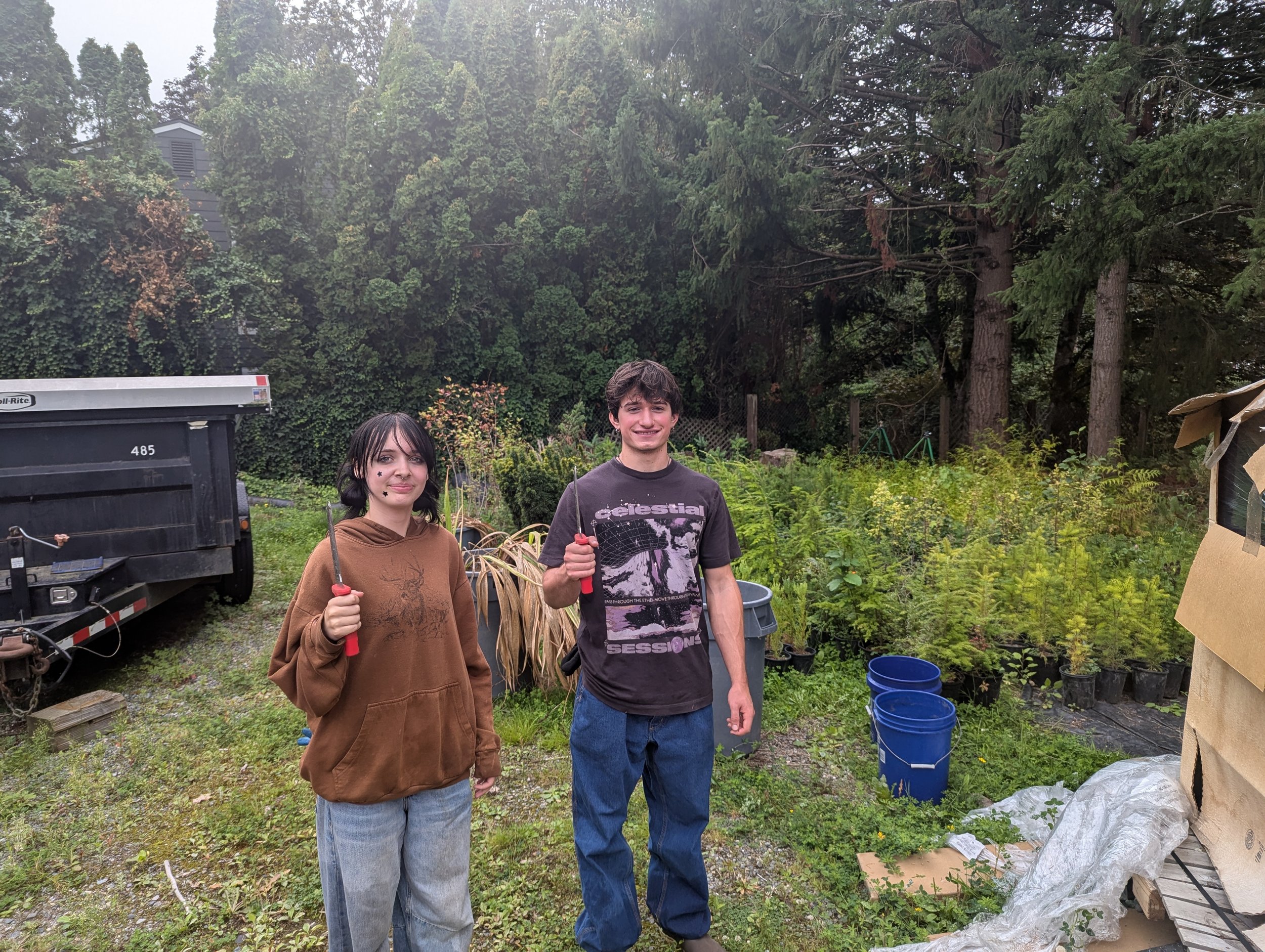
Gibson Ek Interns, Milo Armstrong and Quinault Filo. Photo courtesy of City of Issaquah
Although their summer internship has ended, they remain involved as school-year interns with the City of Issaquah. As the first year of the Miyawaki Forest comes to an end, we asked Quinault and Milo to highlight the experiences they’ve had with the Miyawaki Forest.
Quinault: What has been the most impactful part of the Miyawaki experience?
Watching the growth of this project, from writing the grant to seeing all the plants thriving in the same space that was just grass months ago, has been remarkable. Being able to help create this space and then being given the privilege to take care of it has been great. This experience instilled in me the confidence to pursue a career in a similar field and helped me feel a deeper connection to nature.
Milo: Something that surprised you throughout this project?
Something that surprised me throughout this project was the amount of weeding that took place behind the scenes and how much we were able to clear. Getting a glimpse of how much work building up a new forest can be, has given me a sense of appreciation and reflection about this process.

Tayler Nichols and Issaquah Park Ranger Alex Anderson demonstrating how to plant native species at the Miyawaki Planting Kick-off Event, March 2025.
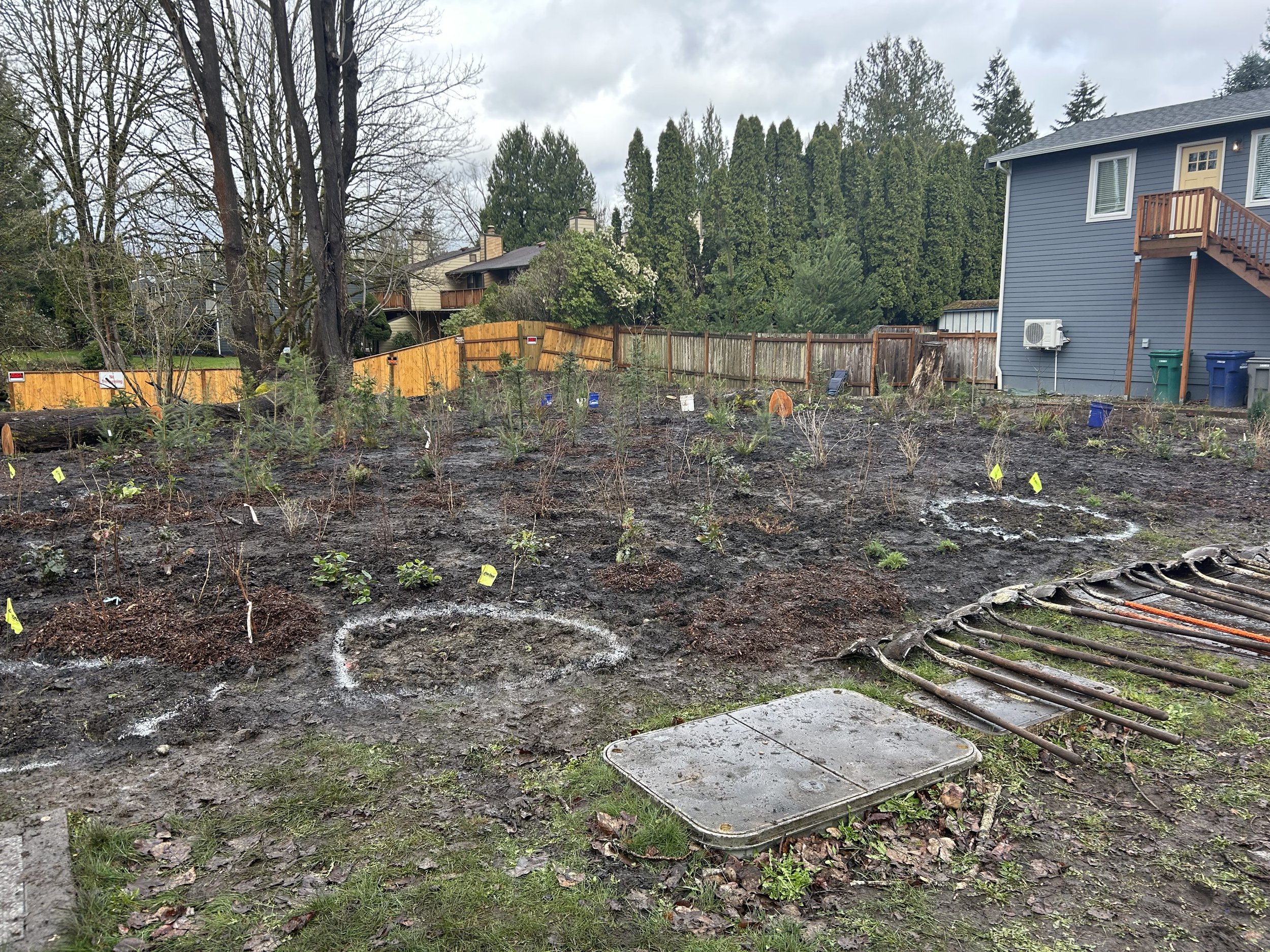
Over 640 native trees and shrubs planted during the Miyawaki Planting Kick-off Event, March 2025.
Both: Do you have a new favorite plant species? Are you rooting for a certain one to be successful?
Milo: Since becoming involved with the Miyawaki Forest, I seem to be biased towards the yarrow. Partially because it is one of the first plant species I was able to clearly identify. Besides that, I’m drawn to its diversity from the other various species. I also find it intriguing that several uses of yarrow take place with medicine and witchcraft.
Quinault: Since the Miyawaki Method uses a wide variety of species to increase growth, I was introduced to a lot of new, interesting plants. One of the most interesting was Ocean Spray, a shrub with beautiful flowers. Most of the planted Ocean Spray did not grow well and died out throughout the summer. But there was one in the back of the site that was flourishing; it grew to be very large over the summer and continues to grow. The underdog story of Ocean Spray on this site has made me a fan, and I hope it never stops thriving.
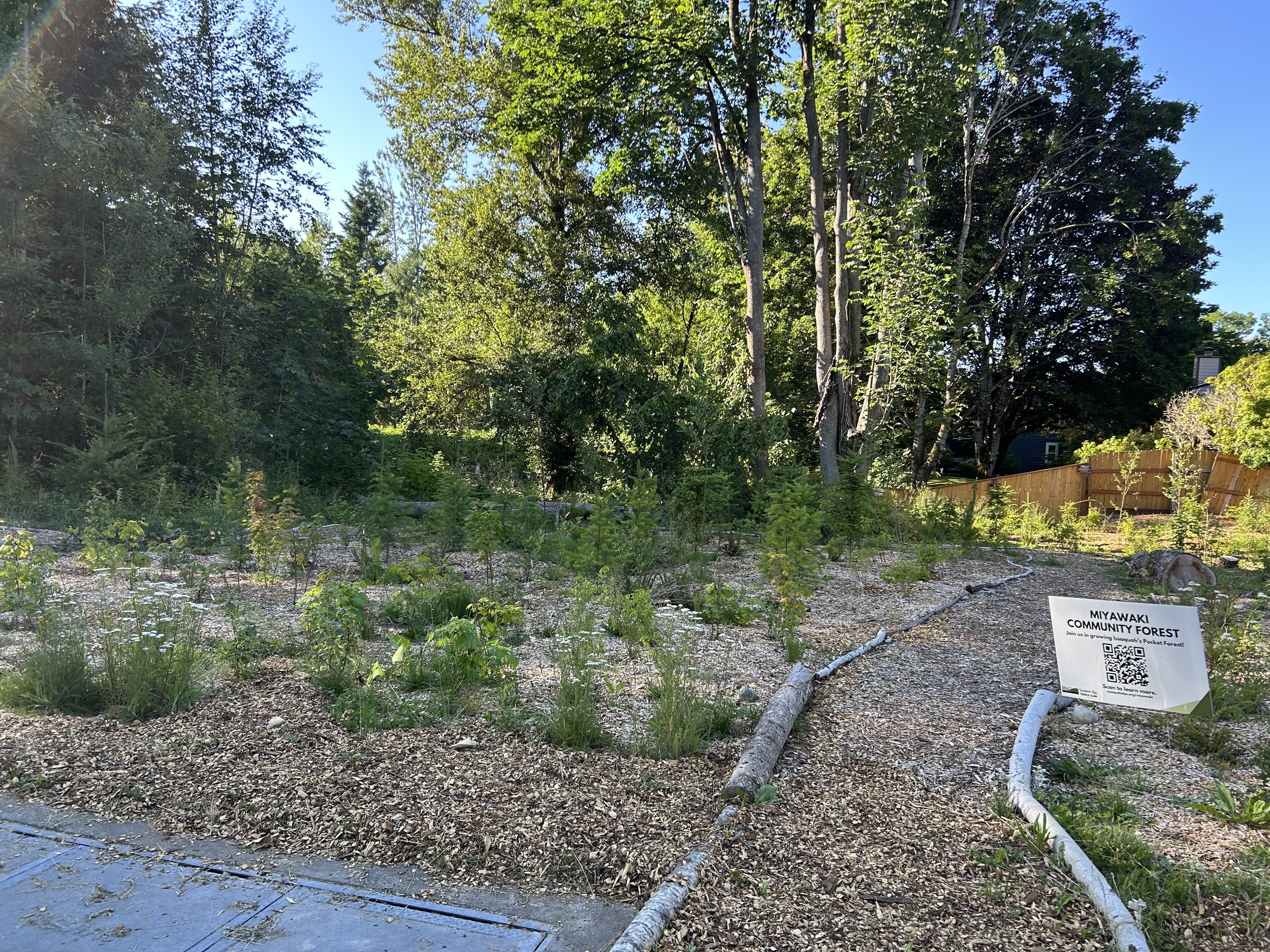
Issaquah Miyawaki Forest, Summer 2025.
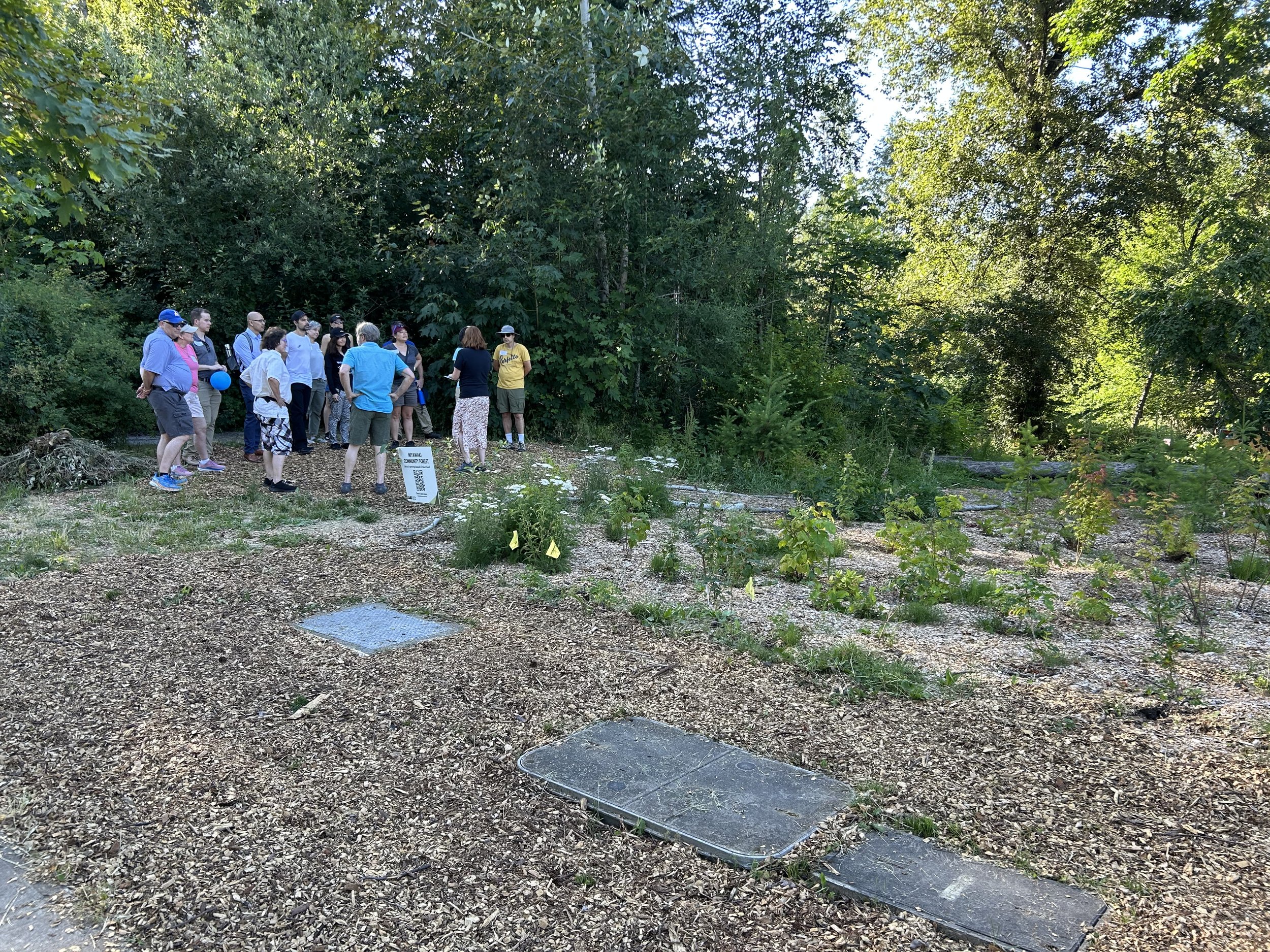
Site tour of Issaquah Miyawaki Forest led by Tayler Nichols, Summer 2025.
Both: What do you hope people walk away with from visiting the Miyawaki Forest?
Milo: I strive for people to get a sense of connection with their community. It seems to me that the Miyawaki Forest is inclusive with public communities, often events are hosted giving people a chance to connect and contribute. In my opinion, that's what makes this project special, that it’s co-operational with the city and its individuals.
Quinault: The Miyawaki Forest is a vibrant example of biodiversity, filled with native plants. As you walk along the trail, you notice the variety of plants and their roles in the ecosystem. With this in mind, I hope visitors leave the forest having discovered a new plant that captured their interest.
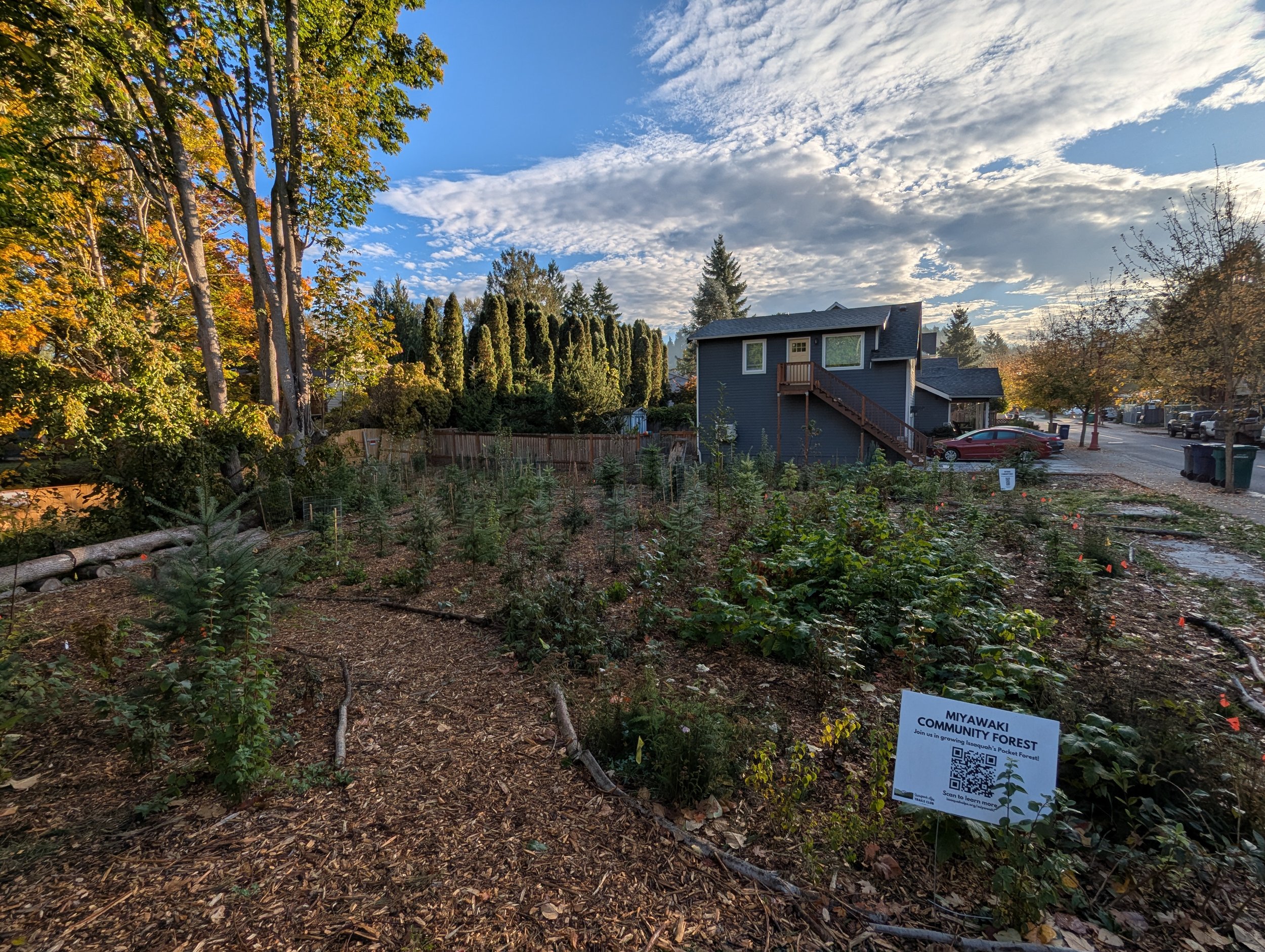
Issaquah Miyawaki Forest, Fall 2025. Photo courtesy of City of Issaquah.
Learn more about the Issaquah Miyawaki Forest.