
Supporter Spotlight: Svet Semov
This month, we’re spotlighting Svet, IATC board member and Communications Committee chair, whose journey into local conservation began with a few hikes and a curiosity about nature. Today, he shares his passion for the Issaquah Alps through storytelling, community involvement, and exploring the natural spaces close to home.
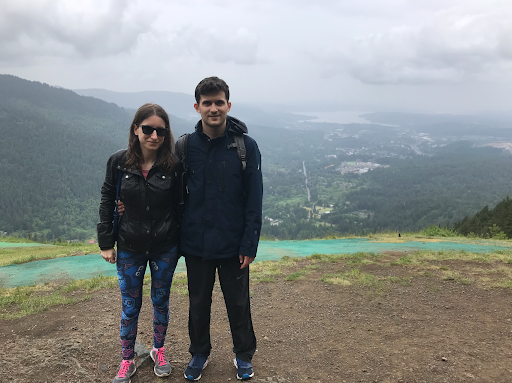
June 3, 2018. Poo Poo Point. Our first trip to Issaquah, one year after we moved to Seattle. I had not yet heard about the Issaquah Alps. We must have found the hike through a “top 10 hikes to do in the Seattle area” Google search. Courtesy of Svet Semov.
By Svet Semov, Issaquah Alps Trails Club Board Member
Tell us a little about yourself and how you first found your way to IATC.
I spend most of my time in the world of algorithms and data. Nature has become a welcome complement to that. I am an economist and data scientist, and I help brands with marketing strategy and optimization (e.g., do we invest more in Meta or TikTok?). I first got interested in nature a few years after moving to Seattle.
My wife and I traveled to Alaska and Hawaii and saw plants and animals that were vastly different from the ones we knew growing up in Bulgaria. That sparked our interest in nature. Around that time, I also read a few books about the environment, like The Overstory and The Ministry for the Future. At some point, I googled “local nature events” and came across IATC.
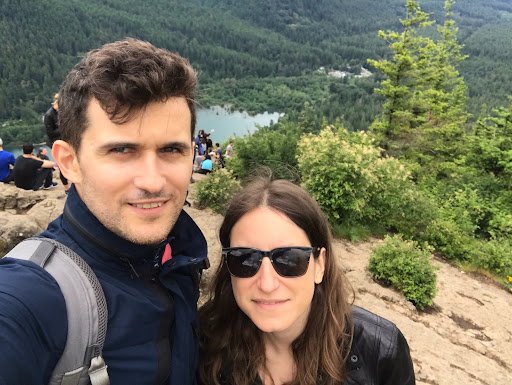
July 1, 2018. Rattlesnake Lake. Courtesy of Svet Semov.
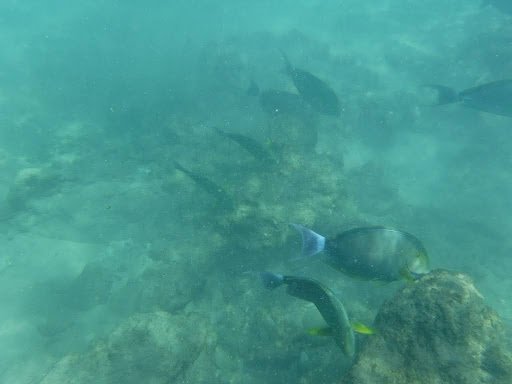
September 2, 2018. Snorkeling at Captain Cook, Hawaii. You could hear parrotfish crunching on the coral. Courtesy of Svet Semov.
What inspired you to join the board, and what has been the most rewarding part of serving in that role?
On my first few IATC hikes, I realized how much there is to see and learn right here in our backyard. David Kappler, one of IATC’s founders, seemed to know the story behind every plant, building, and plot of land. I realized I don’t need to travel thousands of miles to distant islands to experience a sense of wonder and curiosity. On one of those hikes, I also met Kelly Jiang, IATC’s current board president, and Anne Newcomb, a former president. Kelly asked me to write an article about the hike, and writing it got me thinking more deeply about nature and conservation. Shortly after, I joined the board.
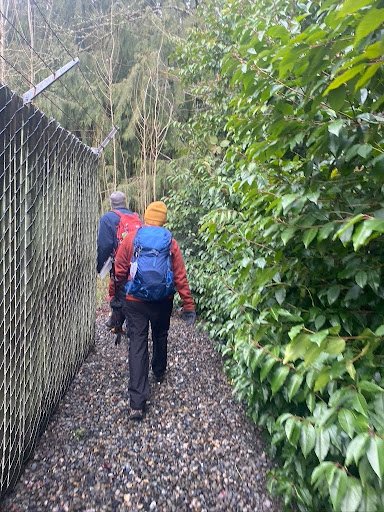
February 18, 2023. My first hike with David Kappler. Courtesy of Svet Semov.
Having grown up elsewhere, I sometimes feel like I was parachuted into the Pacific Northwest, without knowing anything about its history or the people who came here before me. So the most rewarding part has been learning from people who know the Issaquah Alps deeply, and then sharing what I learn. As chair of the Communications committee, I write articles for the Alpiner and create social media posts. For a recent article on flood risk, I had the opportunity to interview Dan Hintz, City of Issaquah Urban Forest Supervisor, and Tor Bell, Operations Director at the Mountains to Sound Greenway Trust. Through those conversations, I came to see that climate change is already surprisingly visible in our backyard once you know where to look. For example, last December’s atmospheric river pushed Issaquah Creek to its fourth-highest flow since 1964. Through the Communications committee, I also regularly speak with Tom Anderson, who’s co-writing the history of IATC, which is a big part of the history of the environmental movement in the greater Seattle area.
But some of the most grounding moments for me are the hands-on events, like the recent Green Issaquah planting day. There’s nothing like getting my hands in the dirt and meeting other members of the community.
July 10, 2024. One of the first infographics I made for IATC. I got lots of help from the other members of the Communications Committee. Courtesy of Svet Semov.
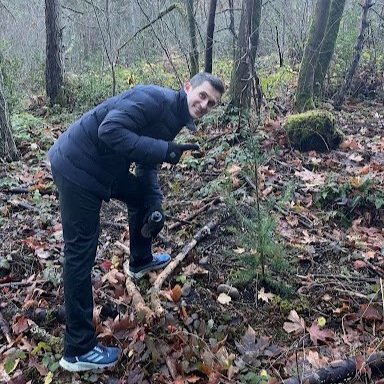
November 22, 2023. Park Pointe. First time I planted a tree with IATC. Courtesy of Svet Semov.
As a local resident, how do the Issaquah Alps show up in your everyday life?
I go to May Creek Park almost every day. At first, I didn’t think it was a part of the Issaquah Alps. Living in Newcastle, the area felt a bit outside of then. Then Tom shared a 2004 Alpiner article, “Our Alps are Number One!”, by Harvey Manning, one of IATC’s founders, that lists May Creek Park as part of the Issaquah Alps. May Creek is right next to Cougar Mountain, separated only by Coal Creek Parkway. This bit of history helped me put my daily walks into context.
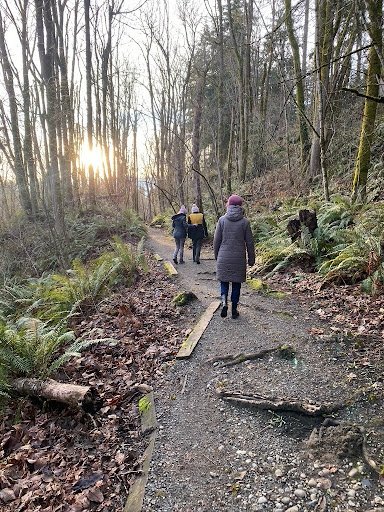
January 2, 2023. One of our first hikes in May Creek. We drove to it because we didn’t yet know we could take a shortcut. The shortcut takes 10 minutes. Courtesy of Svet Semov.
What do conservation and stewardship mean to you, both on and off the trails?
Conservation to me means making deliberate choices that balance what we need as a society with protecting the environment. An excellent example is Talus, a neighborhood on Cougar Mountain, which former IATC President Ken Konigsmark describes as a ‘win-win-win’ deal: more than 70% of the land was conserved, while denser housing was built on the rest. While I like some of the romanticism and urgency I picked up from The Overstory and The Ministry for the Future, I think the reality on the ground is more pragmatic and much slower.
Around Issaquah Creek, conservation has taken three decades of acquiring land piece by piece from willing sellers and tending each site for ten years or more. Tor Bell recalls specific trees planted twenty years ago that are still babies. We can see the results of that work in last December’s flood on the creek. Even though it was a historic flood, it caused only minimal damage. To me, this means that stewardship takes a ton of patience and a willingness to work on a horizon longer than any one of us will see.
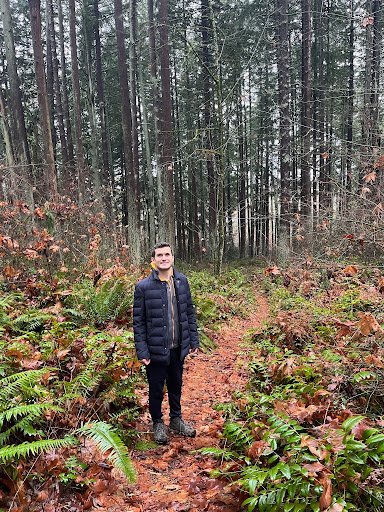
December 11, 2023. Horse Trail connection to May Creek Park. Courtesy of Svet Semov.
Do you have a favorite trail, route, or a special place in the Issaquah Alps that always draws you back?
My favorite trail is De Leo Wall, the part of Cougar Mountain closest to my home in Newcastle. It has some of the highest density of conifers in the Issaquah Alps, and it’s close to the original conifer composition of Seattle area forests (80% conifers, 20% deciduous). I lead hikes there a few times a year. Going back to De Leo Wall reminds me of something Harvey Manning wrote: “Generally, people should stay home. Forget gaining a little knowledge about a lot and strive to learn a lot about a little.”
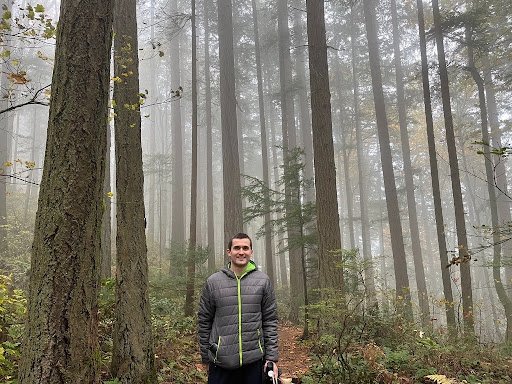
October 30, 2022. De Leo Wall. Possibly the first time we hiked De Leo Wall. Courtesy of Svet Semov.
I find this view compelling, but I’d add one nuance. As a data scientist, I think of travel as giving me cross-sectional variation. I see many different places at a single moment in time. In contrast, local nature gives me time-series variation—one place changing over time. On our trips to Alaska and Hawaii, the plants and animals were so different they filled us with awe without us even trying. At home, I find it easier to stop noticing because everything feels familiar. Noticing local nature asks more of me. I have to slow down, pay attention, and keep coming back. But I think that’s where the depth is. I notice how a place changes over the year, and I get to know the people and organizations who have cared for it for decades. When I visit a place as a tourist, I rarely see that side. For me, travel lit the spark, and the Issaquah Alps deepened it.
What would you say to someone who is interested in getting involved with IATC or local conservation efforts but isn’t sure where to begin?
Just come to an event. Climate change is one of the biggest issues of our time, and IATC offers a pathway to understanding it right here at home. All IATC events are put together thoughtfully, so any one of them is a good start. That’s how it started for me, too.
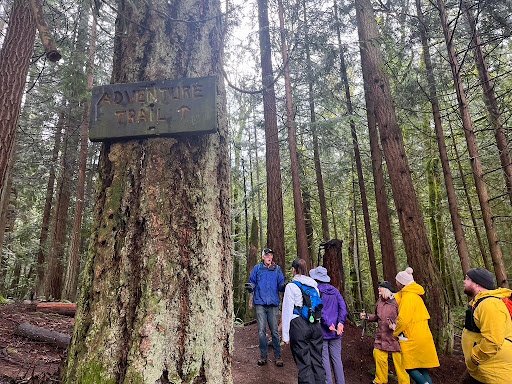
February 11, 2024. Super Bowl Day. Second hike with David Kappler. Courtesy of Svet Semov.