
The Other Cat You Rarely See
Bobcats and Coexistence in the Issaquah Alps
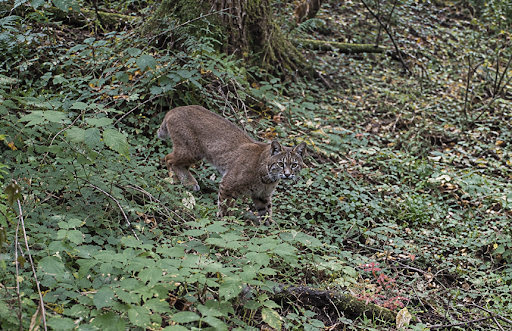
Photo courtesy of Issaquah Alps Wildlife Cam Project.
By Kevin Millar, Issaquah Alps Wildlife Cam Project Steward
Bobcats (Lynx rufus) are medium-sized wild cats, generally less than 30 pounds and about three feet long, with a short black-tipped tail, black-backed ears, and distinctive facial ruffs. They generally avoid people and are far more likely to notice you than you are to notice them. Bobcats are most effective hunting around dawn and dusk, when their eyes are better adapted to low light than their prey's. This behavior is technically known as crepuscular (as opposed to diurnal, meaning active during the day, or nocturnal, meaning active at night). Seeing a bobcat during the day does not necessarily indicate unusual behavior. However, where people are most active, bobcats may shift more of their activity toward nighttime to avoid encounters.
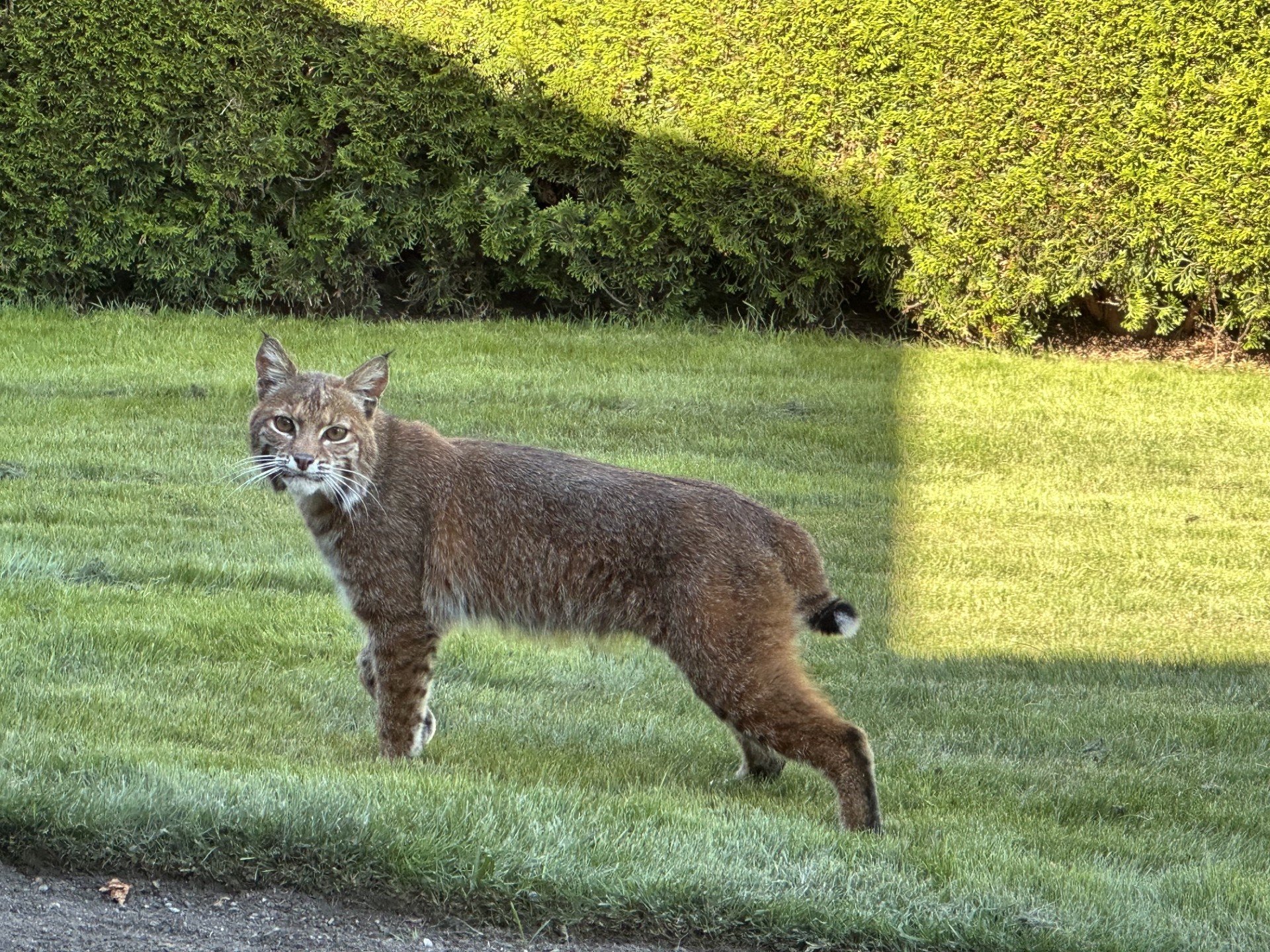
Bobcat spotted in broad daylight in the Lakemont neighborhood on Cougar Mountain. Photo courtesy of Greg Wagner.
Bobcat Country Meets Our Neighborhoods
The Issaquah Alps provide large areas of forested habitat with the cover and prey bobcats require. Yet neighborhoods, roads, backyards, parks, and greenbelts lie immediately alongside this wild landscape. There is no neat boundary where bobcat habitat ends and our community begins.
Bobcats rarely wander at random. WDFW notes they travel in predictable patterns along logging roads, railways, and trails already worn by other animals, moving between resting areas, food sources, and hunting grounds. In the Issaquah Alps area, these same travel corridors often lead directly into greenbelts, drainage culverts, and trail systems used by hikers and residents—the same paths, just used at different hours. A bobcat crossing a neighborhood before sunrise isn't behaving unusually; it's likely using the route it always has, timed around when that route is empty.
This is the coexistence challenge IATC has discussed before. It begins with understanding how our behavior affects these animals sharing our space.
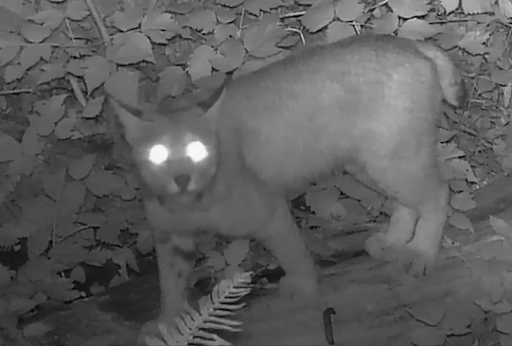
Bobcat image captured at night. Photo courtesy of Issaquah Alps Wildlife Cam Project.
They're Here—Even If We Don't See Them
Remote cameras can give us an idea of how often these secretive creatures are around us without us even knowing it. The Washington Urban-Wildland Carnivore Project operated cameras at 180 locations in King and Snohomish counties and recorded 466 bobcats in one year (some bobcats may have been sighted multiple times).
Just one of our critter cam placements on Cougar Mountain has captured over 700 wildlife videos in the past 18 months. This includes over 40 bobcat sightings (again, some bobcats may have been sighted multiple times). You can contribute your sightings to the Woodland Park Zoo's Carnivore Spotter website. Photographs and videos are particularly valuable because they allow observations to be verified.
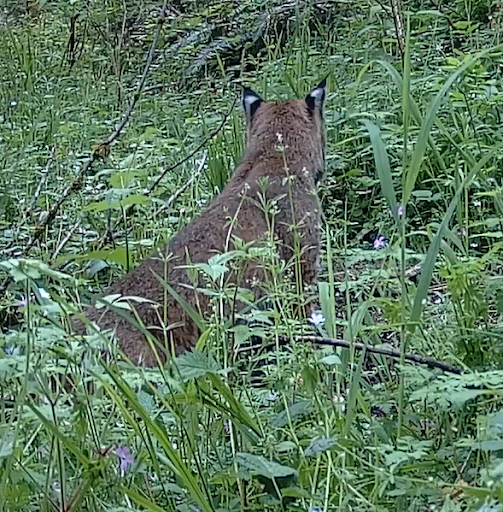
The white spots on the back of the ears make it appear to other animals as a set of eyes. Photo courtesy of Issaquah Alps Wildlife Cam Project.
Coexistence Requires Something From Us
Coexistence does not mean making wild animals more comfortable while around us. It means changing the way we behave so that they can continue to live naturally alongside us.
Bobcats already do much of the work due to their inherent shyness. Our responsibility is not to draw them closer but instead avoid creating conditions that reward them for coming closer.
WDFW warns us to be aware of how we manage our bird feeders. Seed accumulating beneath them attracts birds and rodents, which can in turn attract bobcats. Outdoor pet food can attract other animals, while intentionally feeding deer or feral cats further concentrates animals around our homes. WDFW recommends cleaning beneath feeders and not feeding wildlife because bobcats naturally follow their wild prey. Even though we may not be attracting bobcats directly, we may be attracting the prey that brings the bobcat closer to us.
Bobcats pose a fundamentally different, and far lower, risk to people than cougars do. Cougars are large enough to occasionally treat a person as prey. Bobcats are much smaller, and their behavior toward people runs almost entirely towards avoidance rather than confrontation. The real risk is to unattended pets and poultry. Bring small pets inside from dusk to dawn, when bobcats are most active, and avoid leaving them unsupervised in open yards even during the day. Keep poultry and rabbits in fully enclosed, roofed runs rather than open pens, since a bobcat can climb or jump standard fencing.
If you do encounter a bobcat at close range, don't run, since sudden flight can trigger a chase response, and don't approach either. If it doesn't retreat on its own, face the animal and make yourself appear larger. Then back away slowly. Most bobcats are already retreating before a person finishes reacting. An adult bobcat that stands its ground rather than fleeing or approaches a person directly is unusual enough to warrant a report to WDFW.
The more we understand how bobcats move through and around our neighborhoods, the easier it becomes to share that space without incident. Camera networks, Carnivore Spotter observations, and wildlife research can help us understand how bobcats are adapting to life alongside us.
The next time you are walking along your early-morning trail and think you are alone, you most likely aren't...and you most likely will not be the one who notices the other first.
Learn more about our “wild” neighbors at the Issaquah Alps Wildlife Cam Project.