
When the Warning Swoop Becomes an Attack
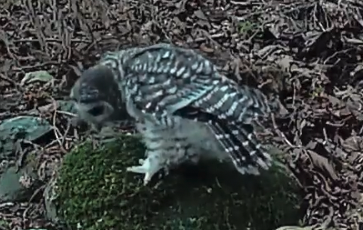
Courtesy of Issaquah Alps Wildlife Cam Project.
By Selena Eon, IATC Board Vice President
As I hiked along the High School Trail, I enjoyed the dappled early evening sunlight through the trees. An owl swooped close over my head. It was silent until directly overhead, when I could hear the whoosh. I saw the owl above my face. This has happened to me many times in the thousands of miles I’ve logged in the Issaquah Alps, so I was startled but not particularly concerned.
Owls are often active in the evening and may fly directly overhead to warn you to leave the area. I quickened my step as the owl passed overhead again; even closer this time, I could almost feel the feathers brush my hair. The owl landed on a nearby branch. As we locked eyes, I knew this wasn’t an ordinary encounter. This owl was white with darker markings and brown eyes. It was large, with a wingspan I estimated to be nearly 3 feet.

High School Trail at dusk. Courtesy of Selena Eon.
I continued down the trail with an even quicker pace. The next sensation I had was of a powerful blow to the head. I felt talons on my scalp and nearly fell over from the force of the impact. Without time to think, I acted. I found a large branch from the trailside in my hand. The owl came for me again, and this time I made contact with the branch. The owl rolled in the air from my blow and settled on the forest floor nearby, watching me.
Yelling loudly, I ran down the trail with the branch, which was 3 feet long, enough to wave overhead each time the owl tried to contact my head. After a few such attempts, the owl settled into a rhythm of flying from tree to tree along my path until I no longer saw it following me.
Once safely at home, my partner helped me clean my scalp wounds—owls have 8 talons, so I had several punctures that were bleeding. I reflected on my experience—what had I done to provoke this attack? What kind of owl was it?
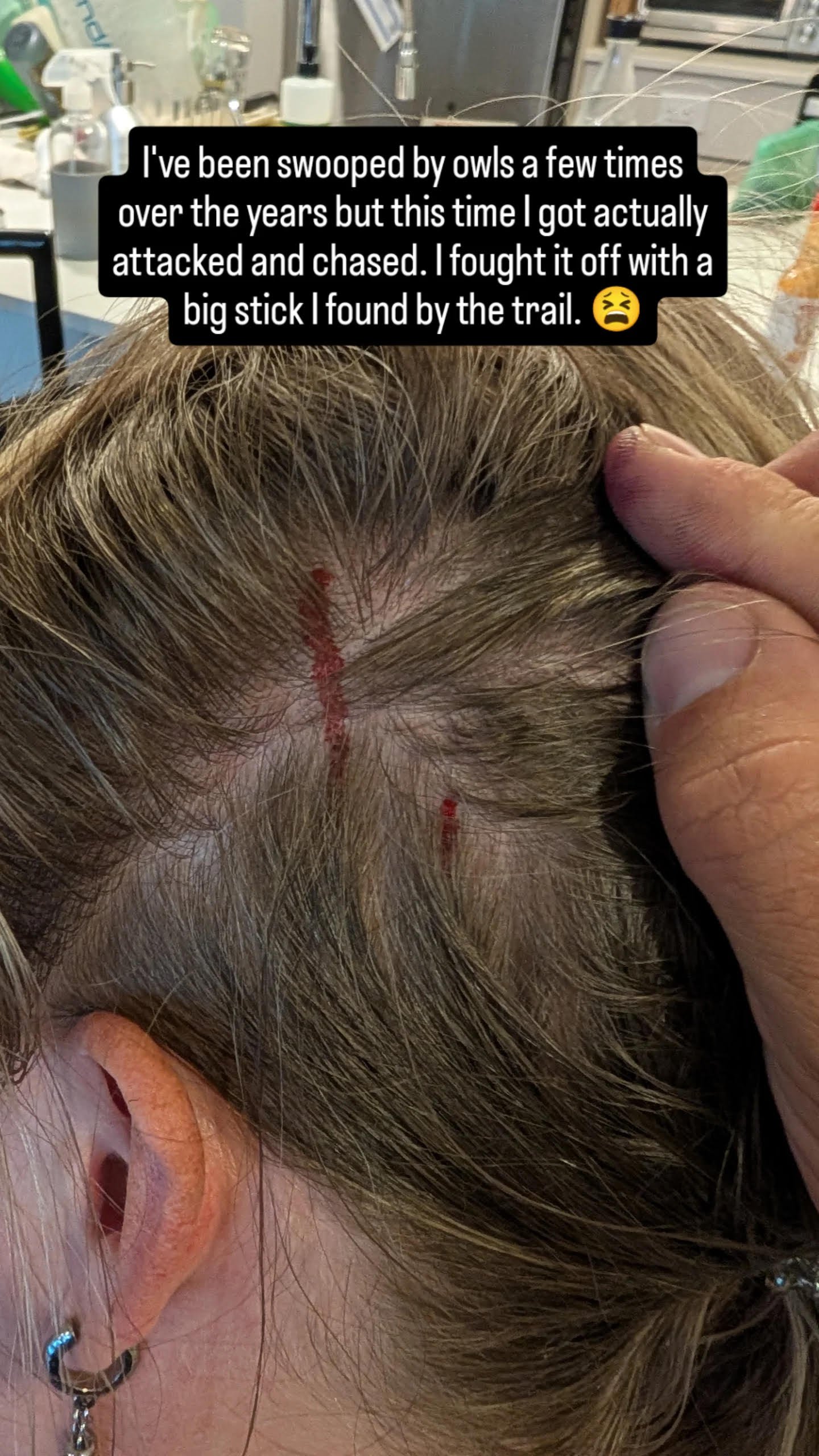
Courtesy of Selena Eon.
After investigating, I became certain that the owl was a barred owl, but white rather than the brown I found photos of. I recalled the owls swooping over my head in the past were similarly colored. Perhaps our local barred owls were sometimes white? I found stories online of similar experiences—unprovoked attacks by white barred owls.
Owls in general, and particularly barred owls, are known for territorial behavior. Merely hiking through an area may be enough to provoke a warning, or, rarely, an attack like I experienced. The owl could have myriad reasons to prefer you leave the area. Particularly in late summer, the owl may have a nest, or young fledgelings learning to fly nearby. We all want to protect our young, so this behavior is understandable.
A Wildlife Cam Project video captured owl activity at one of our sites on public lands in the Issaquah area earlier this year.
Biologists note that human-owl confrontations are growing more common as shrinking forests force owls into closer contact with neighborhoods and trails. As we continue to spend more time in the human/wildlife interface, in places like the Issaquah Alps, we must be aware of the beautiful, powerful owls that call our lush forests home. The IATC Wildlife Cam Project has multiple videos of similar owls. Conversations with local hikers in the days since my attack support the idea that there are more confrontations between owls and hikers than in the past.
As with other types of animal encounters in the wilderness, it is key to know what to do in the unlikely event that an owl makes contact with you.
Always be aware of your surroundings. Owls are frequently active at dawn or dusk and may be more likely to contact you when hiking along during these times of day. Owls have an incredible ability to blend into their surroundings and are famous for their silent flight, so you may not notice an owl until it is very near.
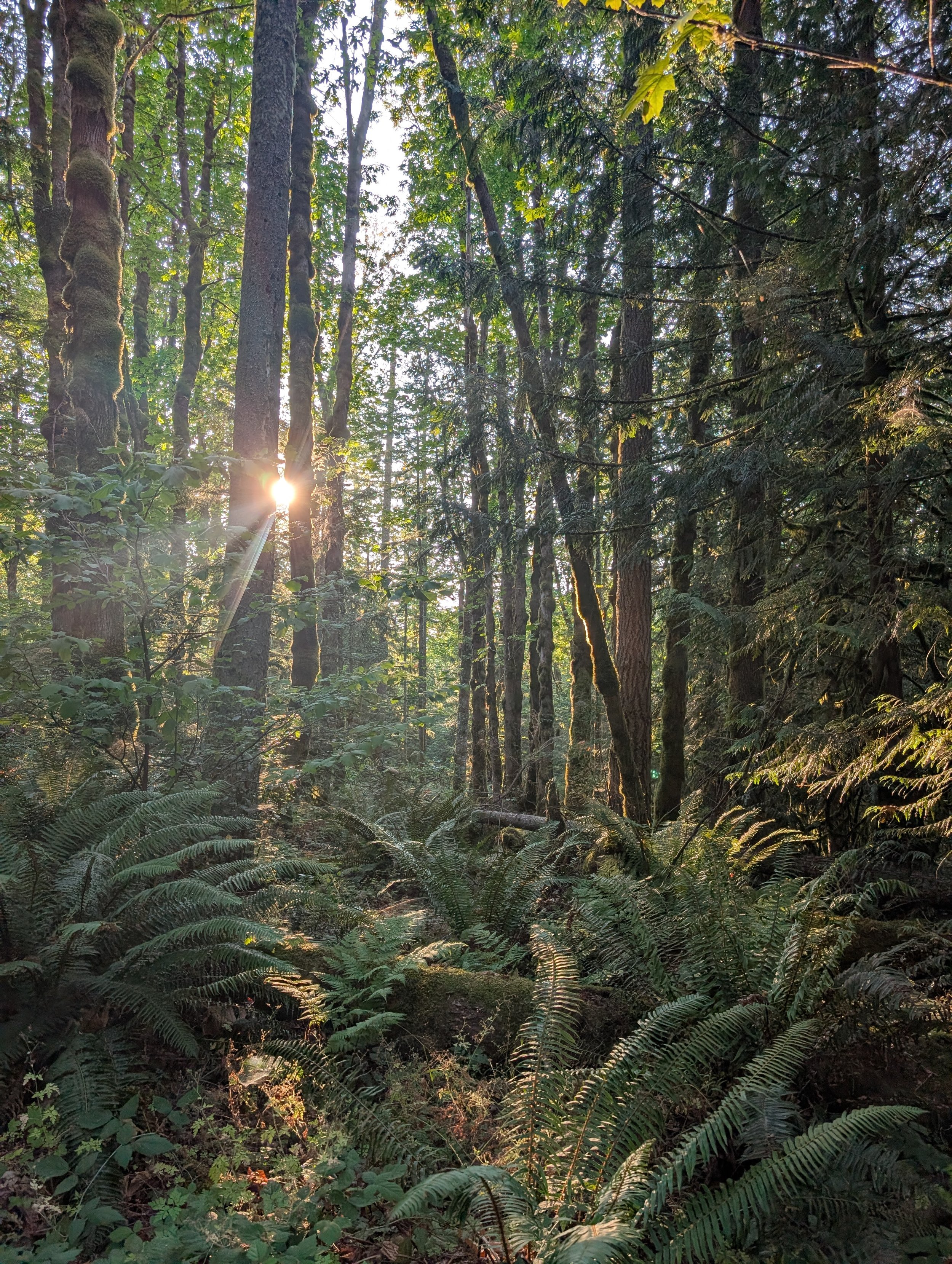
High School Trail at dusk. Courtesy of Selena Eon.
Consider wearing a hat as a protective barrier for your head. I have had a beanie snatched off my head by an owl; the hat likely protected my head from the owl. If this happens, the owl will likely drop the hat nearby, so you won’t lose your beloved IATC hat.
Experts also suggest carrying an umbrella. Although I occasionally hike with an umbrella in the rain, it is not part of my usual kit. An umbrella can be opened over your head if passing through an area where you know owls to be active, such as the Adventure and High School Trail junction.
If you are swooped by an owl, start by yelling and waving your arms and trekking poles to cause the owl to retreat. Most of the time, the owl is intending to scare you away with a bluff strike. If the owl is intent on contacting you, fight back, as I did.

Courtesy of Selena Eon.