Building a Wildfire-Ready Community
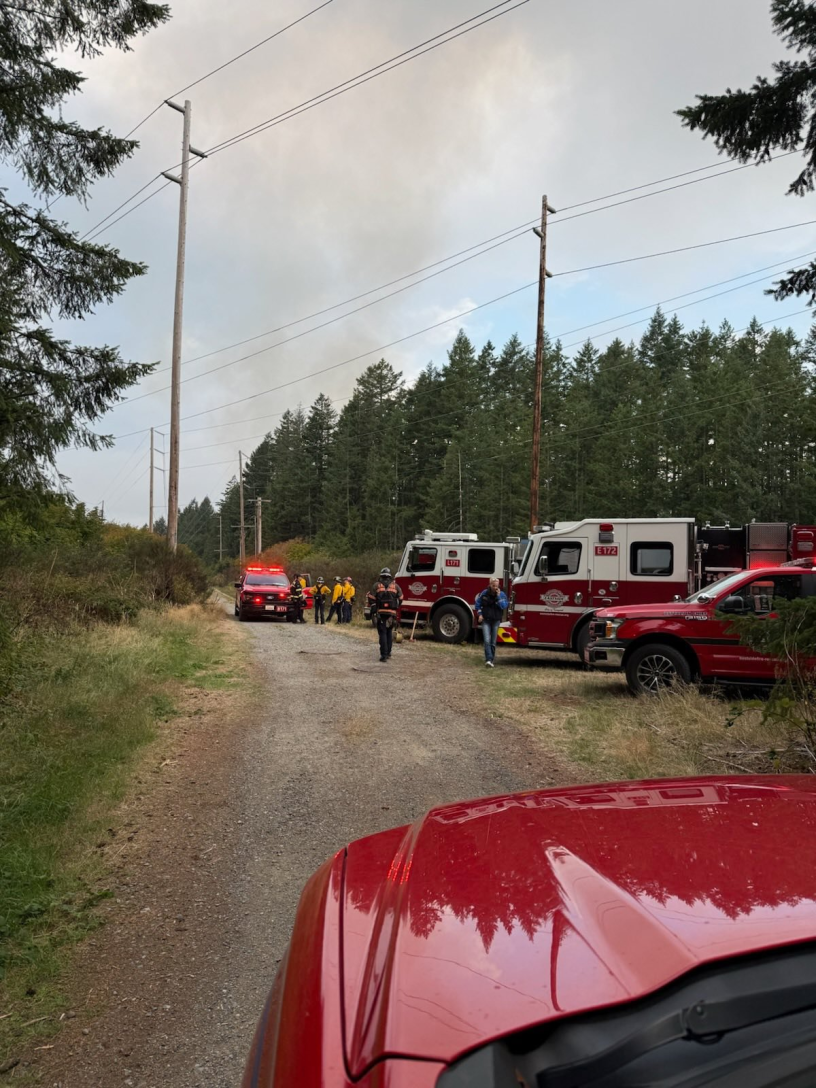
Tradition Plateau Fire, August 2025. Photo courtesy of Eastside Fire & Rescue.
By Cat Robinson, Emergency Coordinator, Wildfire Mitigation, Eastside Fire & Rescue
“It is with our passions as it is with fire and water; they are good servants, but bad masters.”
— Aesop
The Pacific Northwest is defined by its lush evergreen forests and stunning natural landscapes. We hike beneath towering trees, enjoy quiet neighborhoods surrounded by nature, and take pride in calling these forests home. Living so closely connected to nature is one of the greatest benefits of living here—but it also comes with responsibility.
Wildfire is a natural and essential part of healthy ecosystems. Many communities in East King County are located within the Wildland-Urban Interface (WUI)—the area where homes and other development meet or intermingle with forests, grasslands, and other natural vegetation. While living in the WUI offers unparalleled access to nature, it also places people and homes at greater risk from wildfire.
Tradition Lake Fire (August 2025), Tradition Plateau
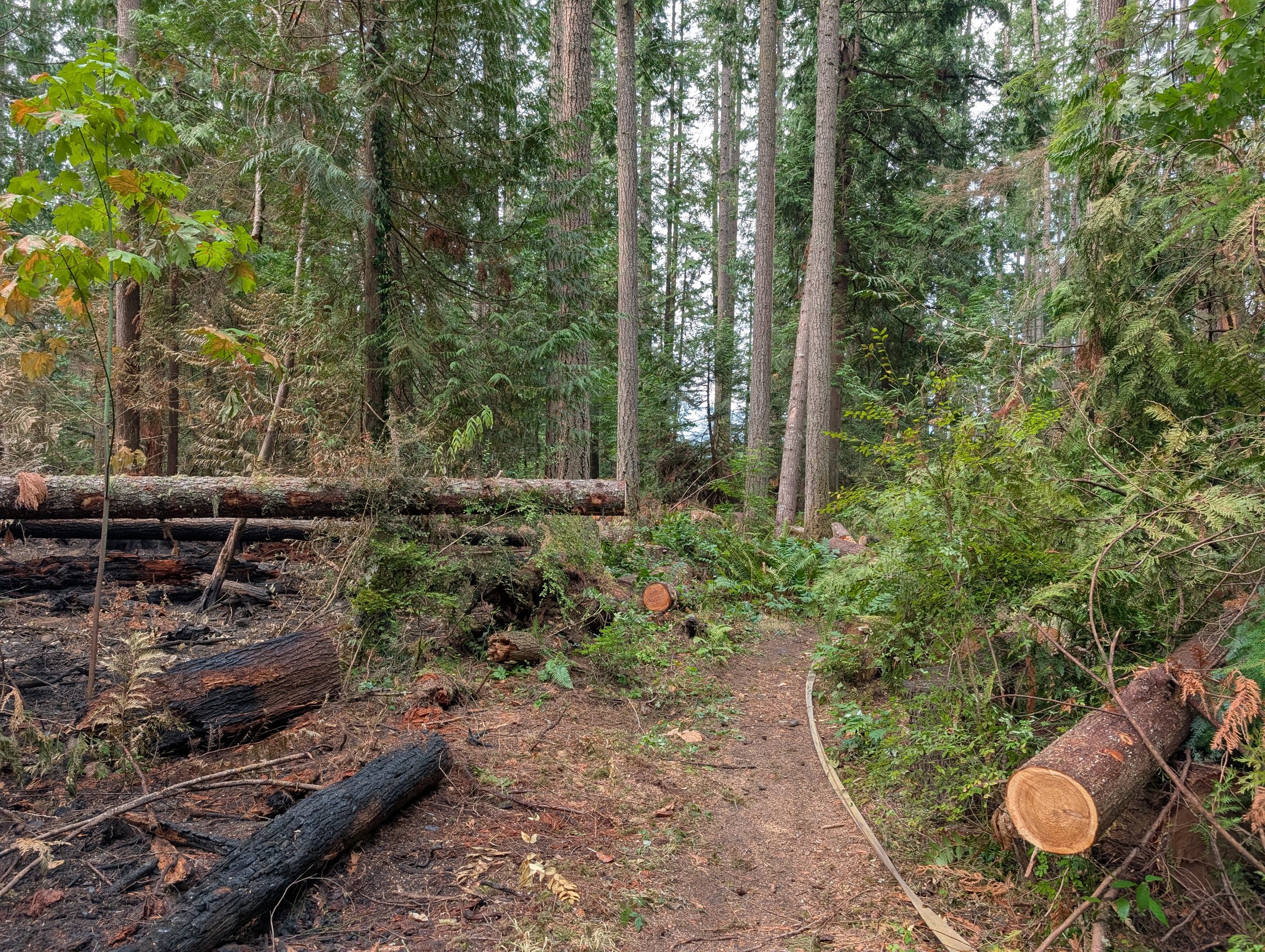
Forest Contrast: This photo highlights the stark contrast between a healthy Pacific Northwest forest and the area burned by the Tradition Lake Fire. They illustrate that even our lush, green forests can burn after just a short period of hot, dry late-summer weather. Photo courtesy of Cat Robinson.
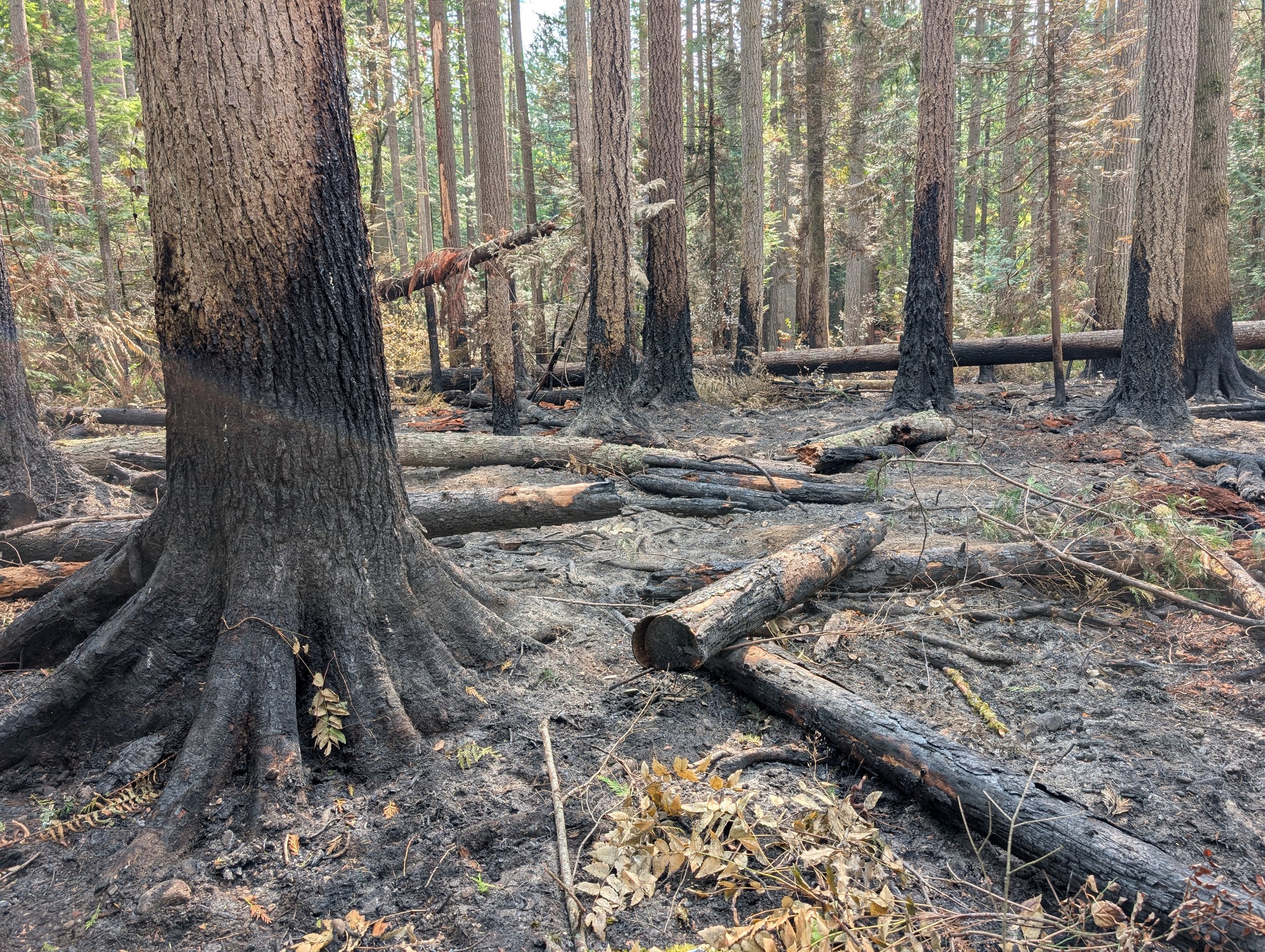
Pacific Northwest Forests Do Burn: This photo shows part of the area most severely affected by the Tradition Lake Fire, demonstrating that Pacific Northwest forests are vulnerable to wildfire ignition and can experience significant damage. Photo courtesy of Cat Robinson.
In recent years, western Washington has experienced warmer summers, drier conditions, and continued growth in WUI communities. Together, these factors have increased wildfire risk, and we have already seen more fires occurring on the west side of the state. For many residents, the concern goes far beyond the flames themselves. Wildfire threatens homes, cherished forests, recreation opportunities, local economies, and the character of the Pacific Northwest. It also raises difficult questions about insurance availability, evacuation planning, and the safety of our families and neighbors.
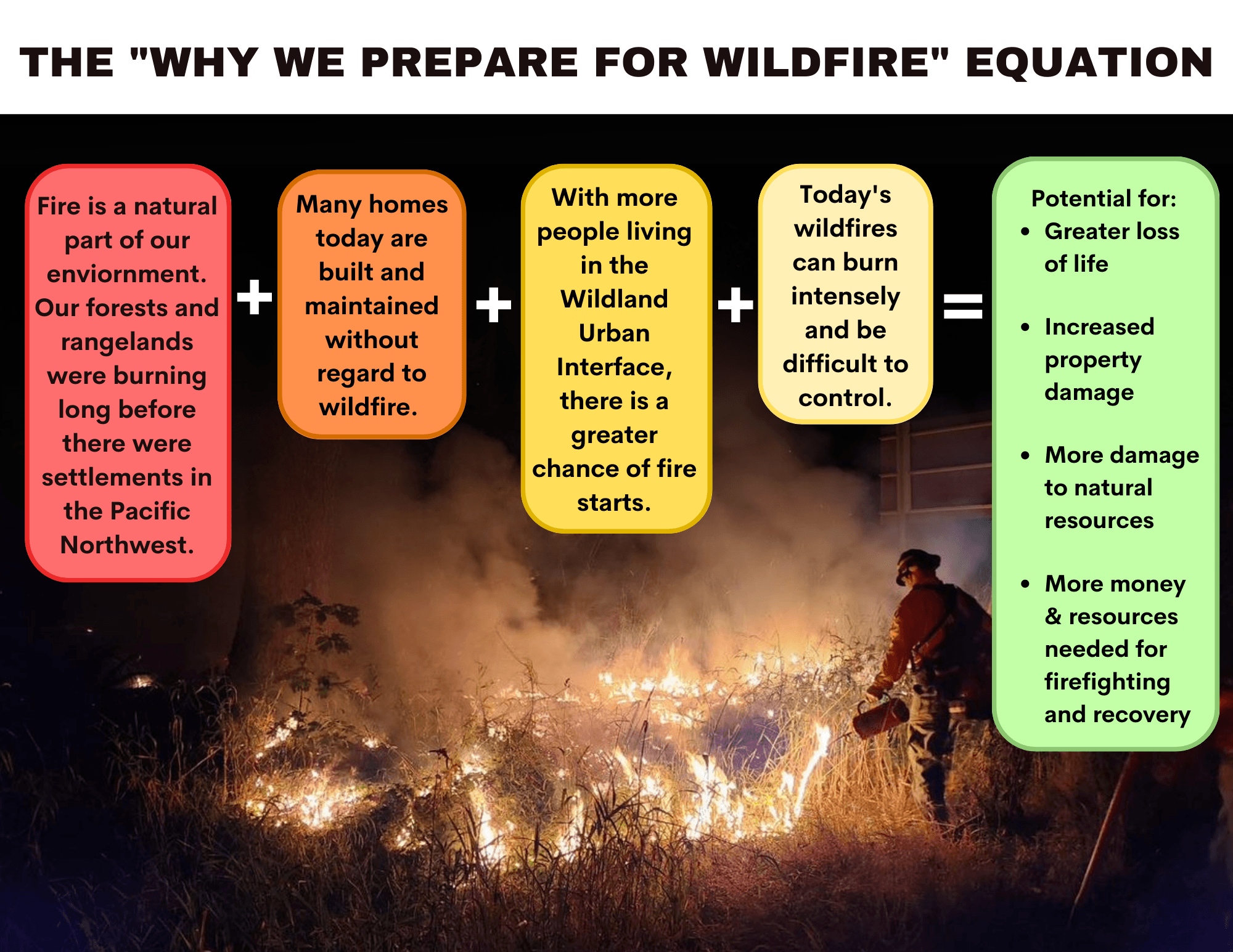
Photo courtesy of Eastside Fire & Rescue.
One of the first questions I hear during a home wildfire assessment is, “Should I cut down all these trees?
The answer is almost always no.
Healthy trees are surprisingly resilient and can often survive low- to moderate-intensity wildfires. In most cases, the trees are not the greatest vulnerability—our homes are.
Contrary to what many people imagine, most homes aren’t destroyed by a towering wall of flames sweeping through a neighborhood. Instead, they are ignited by embers—small, burning pieces of vegetation or building material that can travel miles ahead of the main fire. These embers collect on roofs, in gutters, beneath decks, against siding, and around windows, doors, and vents. If they land in dry leaves, pine needles, bark mulch, or other combustible materials, they can start small fires that quickly spread to the home.
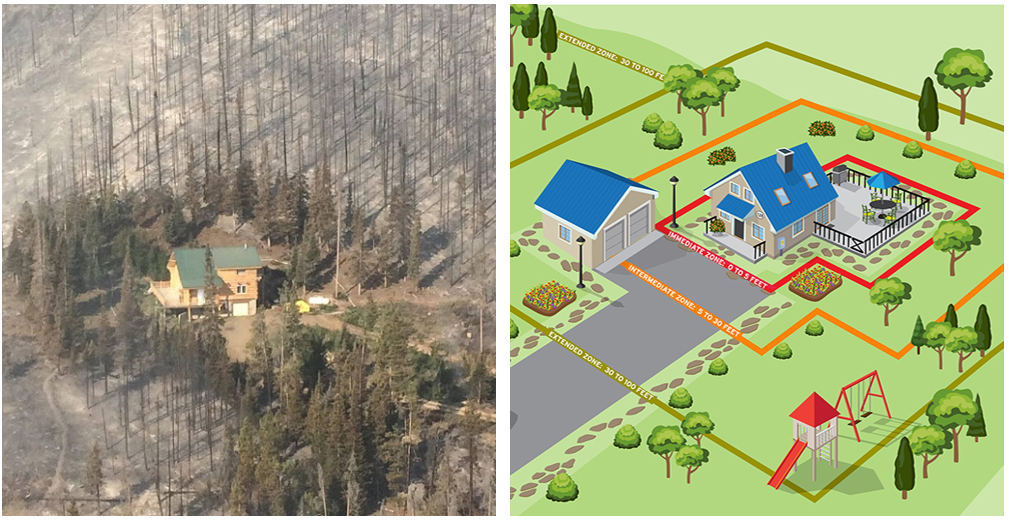
Home Ignition Zones: The Firewise Home Ignition Zone model divides the area around a home into three zones: the Immediate Zone (0–5 feet), Intermediate Zone (5–30 feet), and Extended Zone (30–100 feet). The most effective wildfire mitigation efforts focus on the Immediate and Intermediate Zones, where embers and burning debris are most likely to accumulate. This photo demonstrates how home hardening and maintaining defensible space in these areas can significantly improve a home's chances of surviving a wildfire. Photo courtesy of Eastside Fire & Rescue.
Recognizing this, the National Cohesive Wildland Fire Management Strategy focuses on three interconnected goals:
Resilient landscapes
Safe, effective, risk-based wildfire response
Fire-adapted communities
Creating resilient landscapes is largely the responsibility of federal and state land management agencies. Safe and effective wildfire response falls to organizations like local fire departments and the Washington State Department of Natural Resources. Building fire-adapted communities, however, is something we all share. Homeowners, neighborhoods, businesses, local governments, emergency managers, public health professionals, and community organizations all have a role to play.
The good news is that you have the power to make a meaningful difference.
The King County Community Wildfire Protection Plan (King County CWPP 2025) and the King County Wildfire Ready Toolkit provide practical guidance for reducing wildfire risk around your home. The best place to begin is right outside your front door.
If you own the fuel, you own the fire.
Start by removing combustible materials that have accumulated on, against, or within the first few feet of your home. Clean leaves and pine needles from roofs and gutters. Remove dead vegetation, dry grasses, and flammable debris from around structures. Consider replacing bark mulch immediately adjacent to your home with noncombustible materials such as gravel or stone.
Next, inspect the vents around your home—including crawl spaces, eaves, gables, and roof vents. If the screening is larger than 1/8 inch, embers can enter and ignite vulnerable areas inside your home. Upgrading vent screens is one of many relatively simple improvements that can significantly increase your home’s chances of surviving a wildfire.
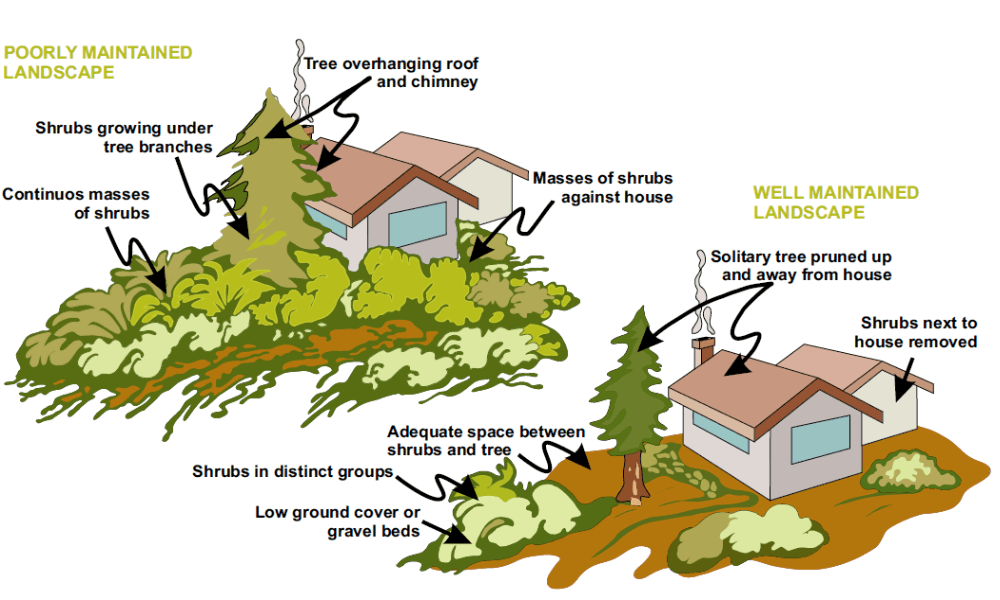
Photo courtesy of Eastside Fire & Rescue.
Remember, a wildfire doesn’t have to be large to have devastating consequences. Even a small fire can threaten homes, disrupt communities, and change lives.
Fortunately, you don’t have to figure it out alone.
Eastside Fire & Rescue offers free wildfire mitigation assessments throughout their service area. Similar assessments are also available through Bellevue Fire, the King Conservation District, and Valley Regional Fire Authority. These assessments provide personalized recommendations to help you reduce wildfire risk and better protect your home.
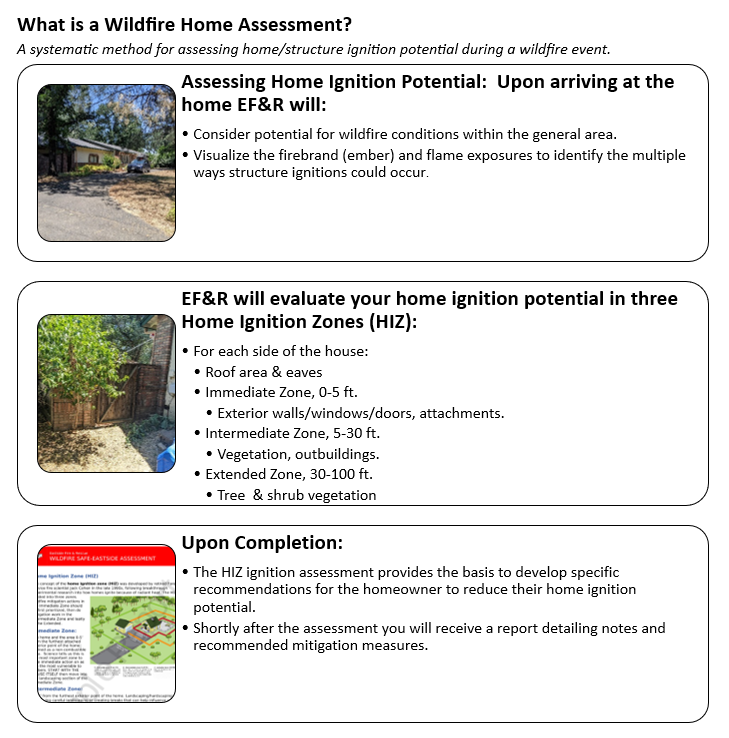
Photo courtesy of Eastside Fire & Rescue.
Every property owner has an opportunity to make their home—and their community—more resilient. Together, we can create and maintain strong, fire-adapted communities that are prepared to live safely with wildfire.