
Supporter Spotlight: Rucker Alex and Karthik Kashinath
This month, we’re proud to feature Rucker and Karthik, dedicated IATC community members whose love for the Issaquah Alps is rooted in stewardship, science, and a deep respect for the land and wildlife that make this place so special.
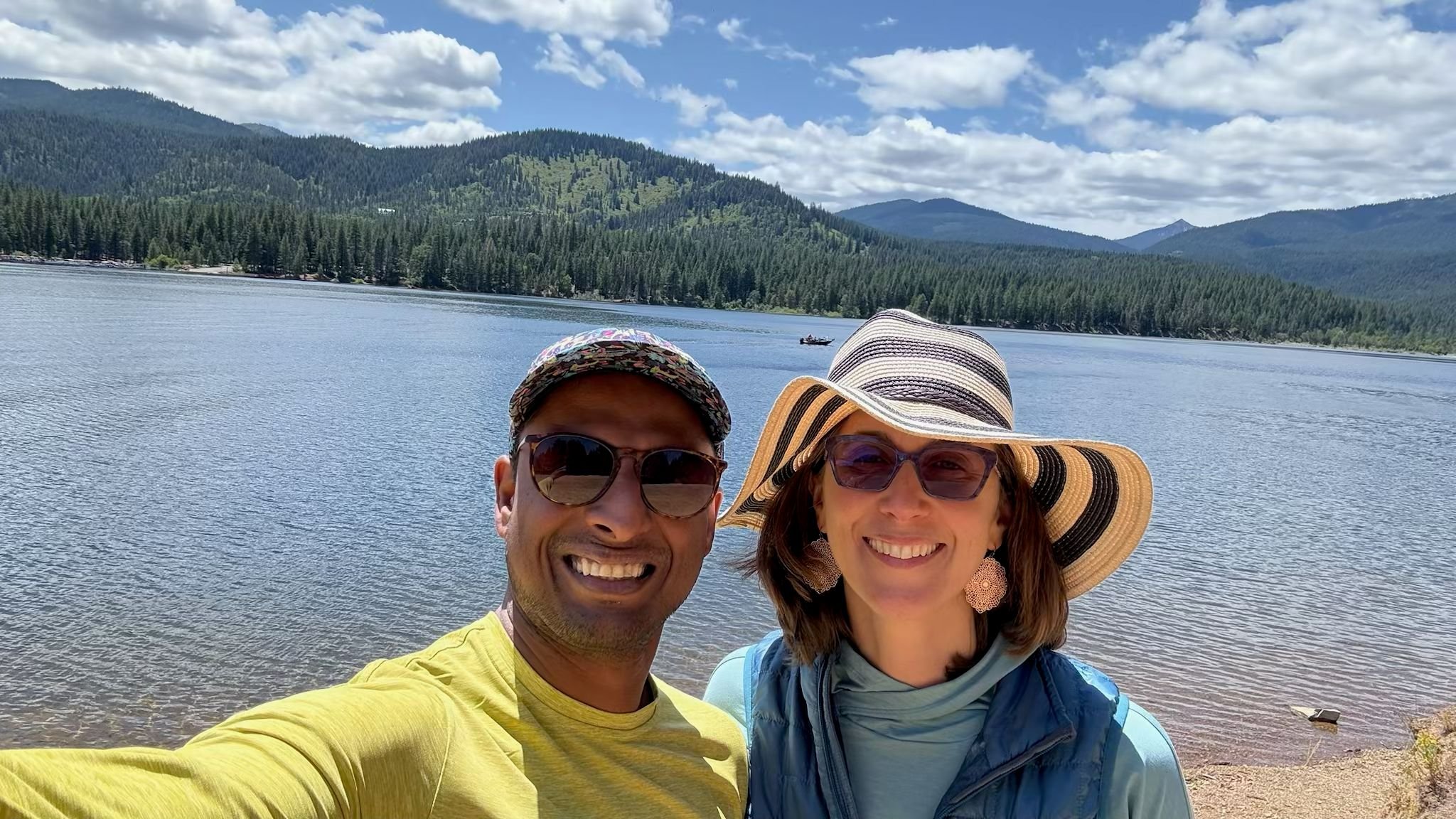
Photo courtesy of Karthik Kashinath & Rucker Alex.
By Rucker Alex and Karthik Kashinath
How did you first become involved with the Issaquah Alps Trails Club (IATC), and what drew you to our mission?
When we decided to relocate from Northern California in 2022, we spent a lot of time talking about where we wanted to live and why. We both love hiking and being outdoors, and Issaquah stood out for its extraordinary access to trails within city limits—and for being a true gateway to the Cascades. We still can’t believe how lush, green, and diverse this landscape is.
One of our earliest and most memorable experiences here happened our first summer in Issaquah, the very afternoon we returned from a family reunion in Rocky Mountain National Park. Eager to stretch our legs, we headed out for a quick late afternoon hike along Tradition Plateau. To our amazement, we encountered three bears—a mama and two cubs—after ironically seeing none at all during our entire week in Rocky Mountain National Park. We realized then that our new hometown isn’t just scenic, it’s alive… and we are sharing land with wildlife and ecosystems that predate our arrival. It deepened our appreciation for the care, stewardship, and advocacy that organizations like IATC provide for Issaquah’s land, wildlife, and trails.
Both of us also have professional backgrounds that complement our care for the outdoors: Rucker as an environmental and climate planner, and Karthik as a climate scientist. We see firsthand how learning to connect with and care for our backyard spaces, local land stewardship, and community-based conservation are essential complements to broader climate action.
Karthik: I first discovered IATC shortly after we moved to Issaquah in summer 2022, when I was searching for a local trail-running group. It was exciting to find a social community that shared both a love of movement on the trails and a commitment to protecting them.
Rucker: I likely first connected with IATC through one of their native plant walks. I initially got to know Pacific Northwest ecosystems through the City of Bellevue’s terrific Naturalist course and follow-on volunteer work. IATC’s events—often co-sponsored with the Washington Native Plant Society—have been a wonderful way to continue learning and deepening that knowledge. I appreciate IATC’s mission, but just as importantly I respect how it goes about fulfilling it: through local partnerships and the work of engaging residents and volunteers.
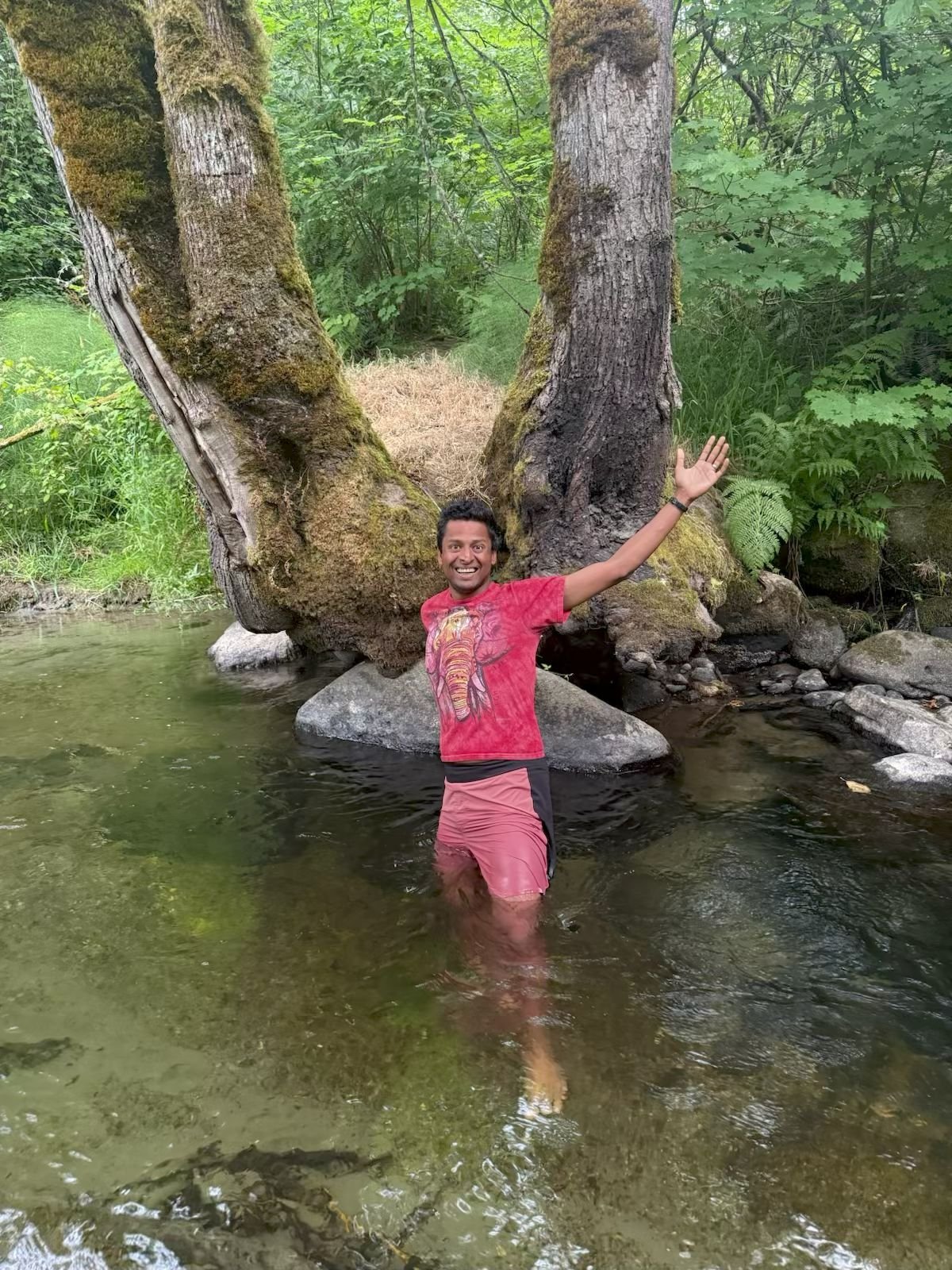
Photo courtesy of Karthik Kashinath & Rucker Alex.
Could you share a bit about your role and affiliation with IATC?
Rucker: In March 2025, my dear friend Julie invited me to volunteer with her planting native shrubs and trees at the new Miyawaki “pocket forest” at 190 NW Dogwood Street in Old Town. This flagship partnership between Green Issaquah and IATC immediately captured my imagination. At a dispiriting time, the idea of transforming a formerly vacant lot into a dense, diverse native forest—with outsized ecological benefits—felt both nourishing and tangible.
After some initial disappointment that volunteer spots filled so quickly, I was grateful when Green Issaquah Volunteer Coordinator Tayler Nichols made the introduction and August Miller invited me to join him as a Miyawaki co-Forest Steward. Since then, it’s been deeply rewarding to regularly walk down to the pocket forest to observe its rapid growth, help with mulching and weeding, and even collect and analyze the first soil samples. We’re hoping these will become an annual practice to help document the soil’s transformation from degraded to nutrient-rich over time. We’re also looking forward to the installation this year of a welcoming entryway public art feature and interpretive signs.
Karthik: While I don’t hold a formal role with IATC, I support the organization as a frequent trail user, volunteer when I can, and advocate for responsible trail use within my own outdoor communities. Also, our household chooses to support IATC financially, as a way of sustaining the long-term health of the landscapes and communities we care about.
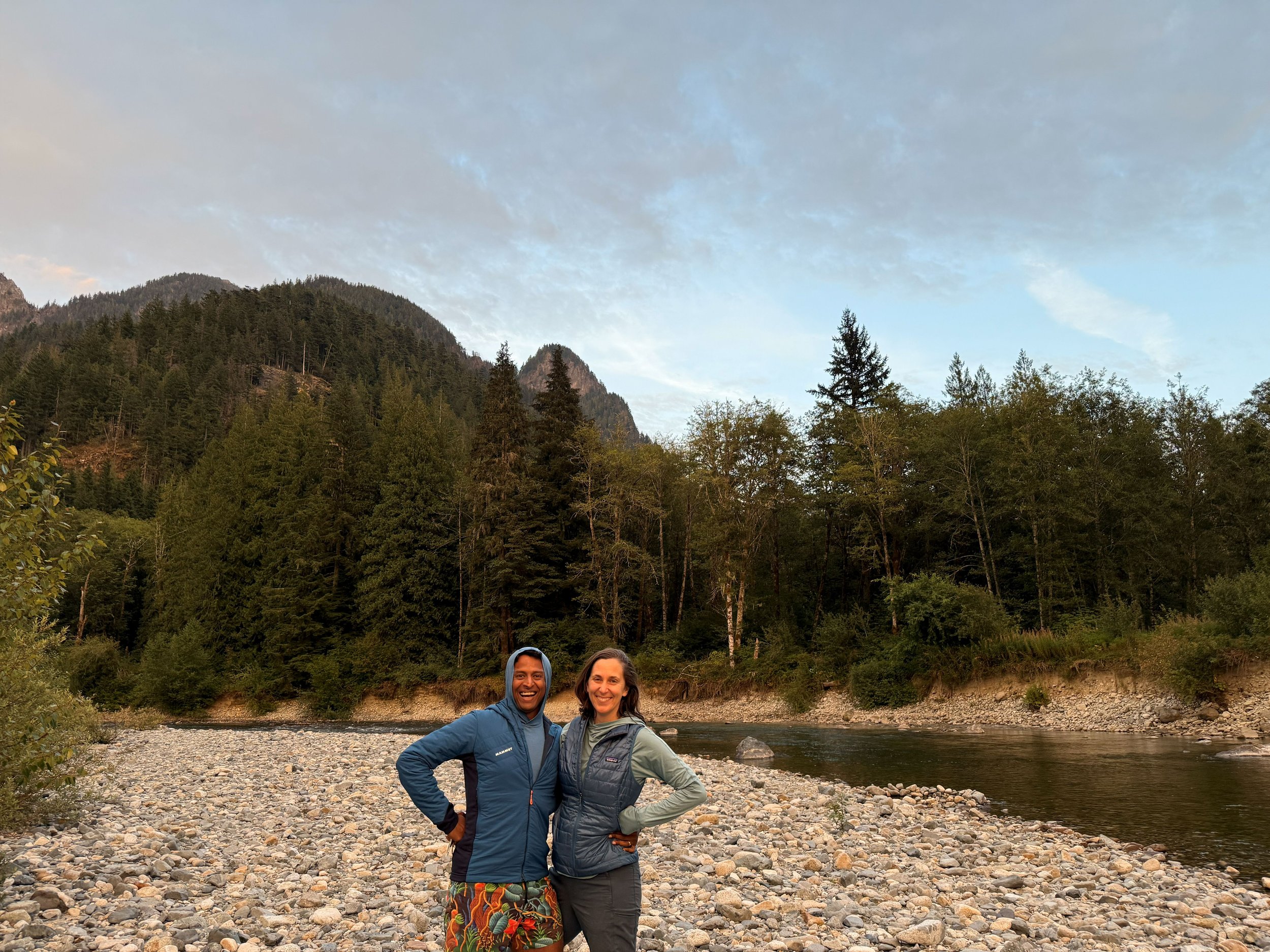
Photo courtesy of Karthik Kashinath & Rucker Alex.
What motivates your commitment to the conservation of public lands, and why is this cause important to you?
We both care deeply about responsible and open access to public lands. Not only have these spaces enriched our own lives through recreation, fitness, and mental restoration, but they also support entire ecosystems and communities of human and non-human life.
In other volunteer roles, we’ve helped take kids hiking, camping, and backpacking, and we’ve seen firsthand how transformative those experiences can be. Most recently, we helped bring a group of Seattle high school students out to an Issaquah Alps trail. For many of them, it was their first time ever visiting a forested area in the region. We created a simple bingo game to help them identify native plants along the trail, and their enthusiasm—and sense of wonder for the ferns, bigleaf maples, and fungi—was infectious. Moments like that reinforce why conservation, education, and access must go hand in hand.
Do you have a favorite trail in the Issaquah Alps? What makes it stand out for you—whether for its natural beauty or personal significance?
We live at the base of Squak Mountain and love being able to walk from home to the Bullitt Fireplace via the Bullitt Trail. It’s a short, satisfying hike in any season and feels like an extension of our neighborhood. We also love seeing the remnants of the original fireplace from a now-vanished building; more evidence of the life that existed before we arrived.
We also spend a lot of time on Tiger Mountain. Poo Poo Point via the High School Trail is a favorite weekday “happy hour” hike in the summer, and seeing the rainbow of paragliders soaring through the sky are enough to soften any crusty mood. The longer Tiger Mountain routes double as training hikes throughout the spring, summer, and fall. Karthik often loads up a 40 to 50-pound pack in preparation for mountaineering season. We’re incredibly grateful to live somewhere that allows us to build strength, community, and stewardship all on the same trail system.
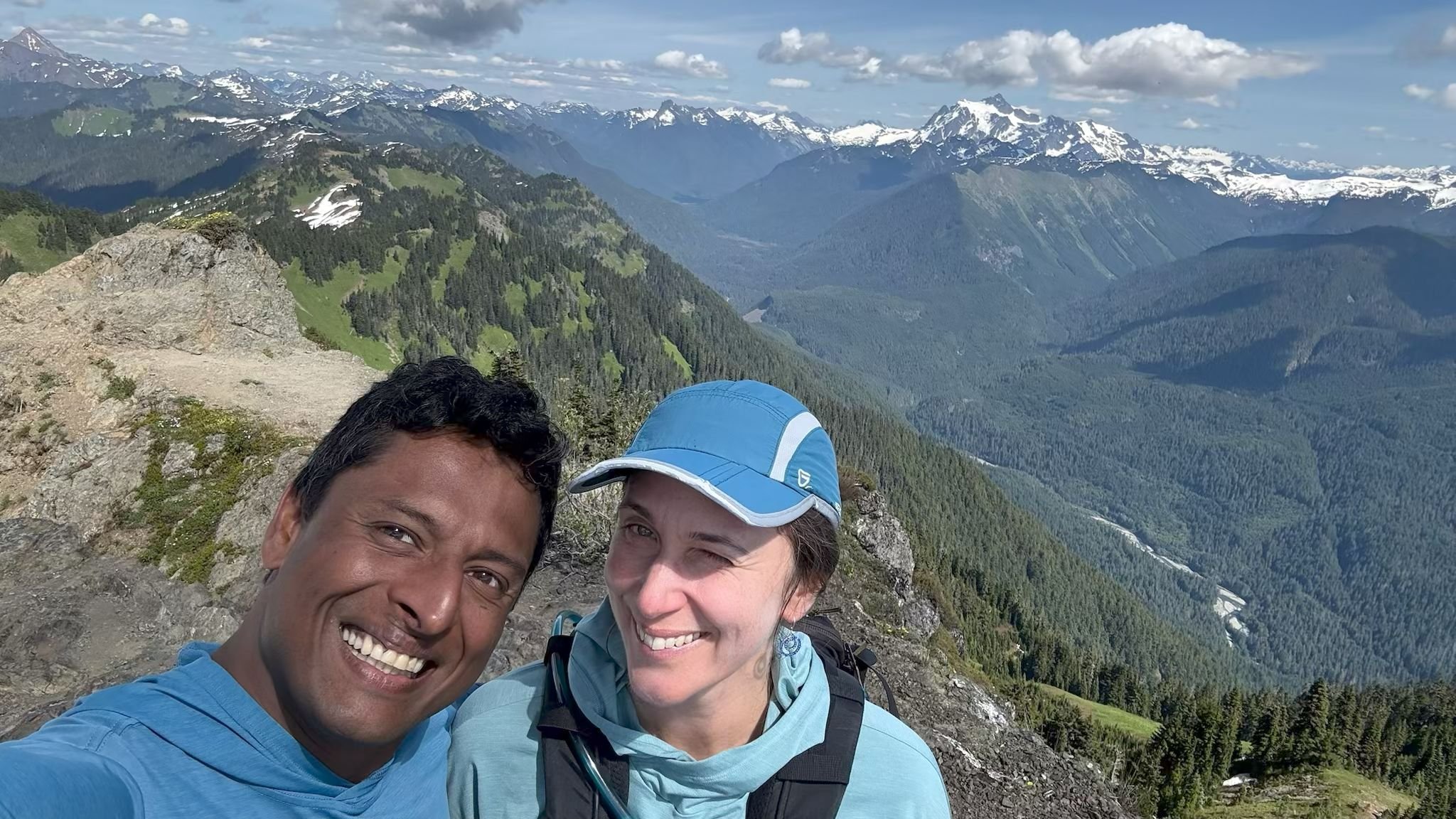
Photo courtesy of Karthik Kashinath & Rucker Alex.
Looking ahead to 2026, what are your goals or plans, and how do you envision further contributing to the conservation of our natural spaces?
In 2026, we’re excited to participate in a year-long naturalist immersion course, with one blissful screen-free weekend each month devoted to studying different ecosystems across Washington State. We see this as a way to deepen our ecological literacy and bring that knowledge back to the way we are trying to show up in the world.
We hope to continue supporting IATC through volunteering, attending its programming, and advocacy—and by helping connect more people, especially youth and newcomers to the region, to the Issaquah Alps in ways that foster respect, curiosity, and long-term care for these remarkable natural spaces.